Brook
Farm, perhaps history's most well-known utopian community,
was founded by George and Sophia Ripley near West Roxbury,
Massachusetts. Its primary appeal was to young Bostonians
who shrank from the materialism of American life, and
the community was a refuge for dozens of transcendentalists,
including Ralph Waldo Emerson and Nathaniel Hawthorne.
more
about Brook Farm
April
1, 1918
Following
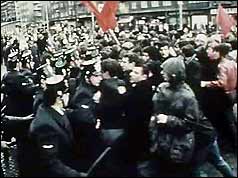
four days of demonstrations against the Military Services
Act that devolved into rioting, Prime Minister Robert
Borden called in troops from Ontario to stop the violence.
Orders from the soldiers were read in English only, and
when the demonstrators didn’t disperse, the troops
fired, killing four and wounding 70.
[see
March 28, 1918]
memorial
monument
April
1, 1932
500
schoolchildren paraded through Chicago's downtown section
to the Board of Education offices, demanding that the school
system provide them with food.
April
1, 1955
The
African National Congress had called on parents to withdraw
their children by this day from South African schools in
resistance to the Bantu Education Act. That 1953 law transferred
education of the Bantu (blacks) from religious missions
to state-controlled schools. Mission education, argued
the then minister of Bantu Education, Dr. H.F. Verwoerd,
not only tended to create “false expectations” amongst
the natives, but was also in direct conflict with South
Africa’s apartheid policies.
April
1, 1970
Following
decades of struggle and ending a five-year national boycott,
the United Farm Workers signed its first contract for
table-grape workers with two of California's largest
grape growers.
read
about the boycott
April
1, 1983
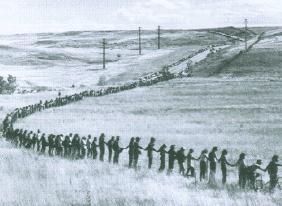
Protesters
in the United Kingdom formed a human chain 22.5 kilometers
(14 miles) long to express their opposition to the presence
of nuclear missiles. The chain started at the American
airbase at Greenham Common, passed the Aldermaston nuclear
research center, and ended at the ordnance factory in
Burghfield.
At the same time 15,000 people took part in the first of a series of
anti-nuclear marches in West Germany. They are protesting against the
siting of American cruise missiles on West German territory.
April
1, 1985
The
Environmental Protection Agency ordered an end to the dumping
of sludge off the New Jersey coast into the Atlantic Ocean.
April
2, 1966
One
hundred thousand Vietnamese demonstrated in Da Nang against both the
U.S. and South Vietnamese governments.
April
2, 1970
Massachusetts
enacted a law which exempted its citizens from having to fight
in an undeclared war.
April
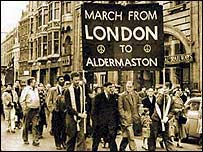
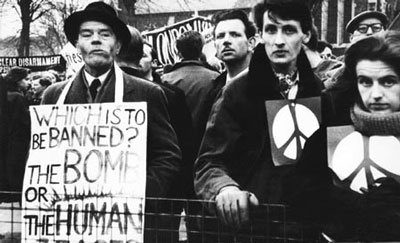
3, 1958
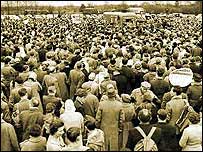
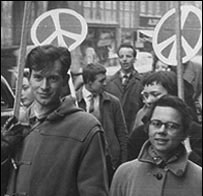
Three
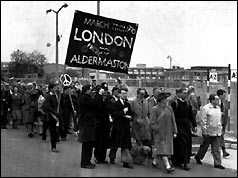
day, fifty mile peace march began from Trafalgar Square, London,
to Aldermaston, Berkshire site of the AWRE (Atomic Weapons
Research Establishment). This famous march marked the beginning
of many protests against Britain's development of nuclear
weaponry.
Some
10,000 people joined the 1958 rally.
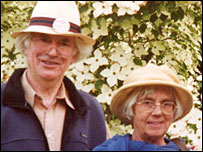
David
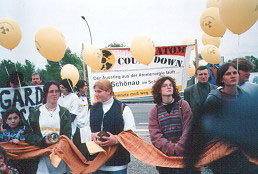
and Renee Gill at the first Altermaston march 1958 (left)
and at the April 2004 march (right)
...still
protesting for
nuclear
disarmament.
read
the story
April
3, 1968
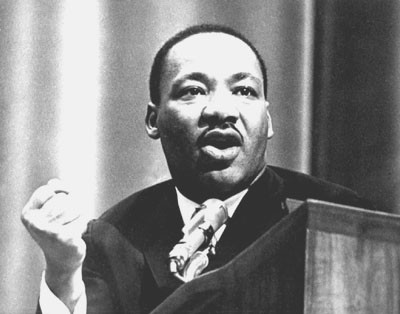
The
Reverend Martin Luther King, Jr. delivered his "I've
been to the mountaintop" speech in Memphis, Tennessee.
King was there to support sanitation workers striking to protest
low wages and poor working conditions.
“...I've
seen the Promised Land. I may not get there with you. But
I want you to know tonight, that we, as a people, will get
to the promised land!"
read
the speech
...or listen
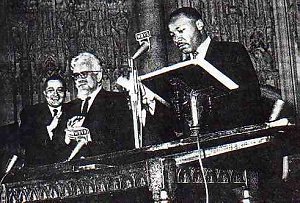
April
4, 1967
Rev.
Martin Luther King, Jr., head of the Southern Christian
Leadership Conference, in a speech at the Riverside Church
in New York City, called for common cause between the civil
rights and peace movements. The Nobel Peace Prize winner
proposed the United States stop all bombing of North and
South Vietnam; declare a unilateral truce in the hope that
it would lead to peace talks; set a date for withdrawal
of all troops from Vietnam; and give the National Liberation
Front a role in negotiations.
"...this
war is a blasphemy against all that
America
stands for...."
read
the speech
or
listen
April
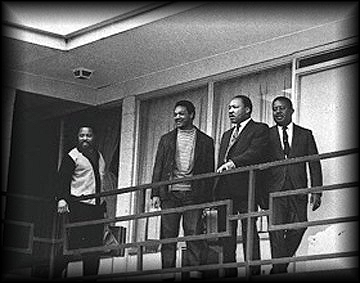
4, 1968
Martin
Luther King, Jr. was shot and killed at 39 in Memphis, Tennessee,
where he had come to lead a march of sanitation workers.
Riots in reaction to the assassination broke out in over a
hundred cities across the U.S., lasting up to a week; cities
included Chicago, Baltimore, Washington, DC, Cincinnati, Boston,
Detroit, Philadelphia, San Francisco, Toledo, Pittsburgh,
and Seattle. The government deployed 75,000 National Guard
troops. 39 people will be dead and 2,500 injured.
He
was shot by James Earl Ray, who confessed to the slaying,
was sentenced to 99 years in prison, but then recanted. Numerous
people originally involved in investigating him have raised
serious doubts about his involvement; after Ray's death, a
1999 civil jury trial in Memphis concluded that Ray did not
act alone.
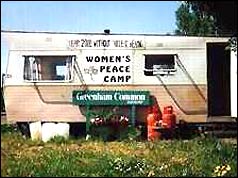
April
4, 1984
The women of the main peace camp at Greenham Common in Berkshire,
England, were evicted by British authorities. They had been
encamped for over two years to oppose the presence of nuclear-armed
cruise missiles at the military base there. They said it would
not end their protest.
April
5, 1972
The Harrisburg Seven case ended in mistrial after 11 weeks.
The Seven were charged with plotting to kidnap Secretary of
State Henry Kissinger, among other alleged crimes. Only Phil
Berrigan and Sister Elizabeth McAllister were declared guilty
-- of smuggling letters in and out of prison. They later married,
co-founding Baltimore's venerable Jonah House.
visit
Jonah House
April
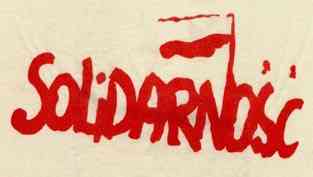
5, 1989
Solidarity
(Solidarnosc in Polish) became the first independent labor
union given legal status in Poland. It started out as a strike
committee among shipyard workers advocating democratic reforms
during the summer of 1980 in Gdansk. A very high percentage
of the Polish workers became members despite the union’s
having been declared illegal in October 1982.
April
5, 1996
54
were arrested in a Good Friday protest at the Livermore Nuclear
Weapons Laboratory in California.
April
6, 1712
The
first major slave rebellion in the North American
colonies
took place in New York.
read
more
April
6, 1983
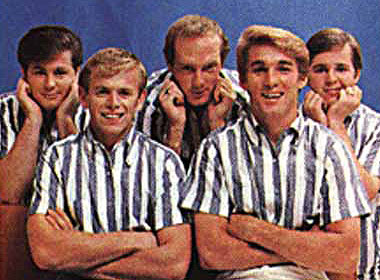
Interior Secretary James Watt banned the Beach Boys from the
Fourth of July celebration on the Washington Mall, saying
rock 'n' roll bands attracted the ''wrong element."
April
6, 1996
Eleven were arrested at the main post office near Capitol
Hill in Washington, D.C., for attempting to mail medical supplies
to Iraq in defiance of U.S.-led embargo.
a
chronology by Voices in the Wilderness and the struggle against
sanctions
April
7, 1994
Genocide
in Rwanda began.
Over
the next 90 days at least a half million people were killed
by their countrymen.
This
day is commemorated annually with prayer vigils in Rwanda.
Stop
Genocide today!
Save
Darfur!
April
8, 1993
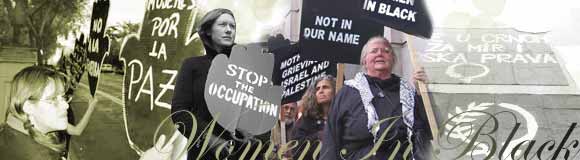
Women
in Black demonstrated in solidarity with their Serbian sisters
in
Lund,
Sweden.
more
about Women in Black
April
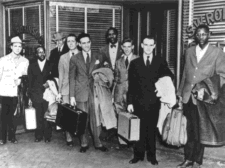
9, 1947
First
freedom ride, the "Journey of Reconciliation," left
Washington, D.C. to travel through four southern states. The
integrated bus tour was sponsored by CORE (Congress for Racial
Equality) and FOR (Fellowship of Reconciliation).
read
more about the freedom rides
April
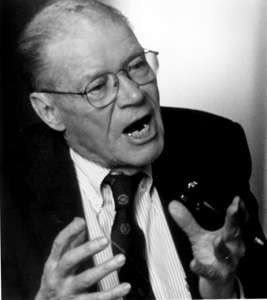
9, 1995
Former
Secretary of Defense Robert McNamara first publicly acknowledged
that "we were terribly wrong" to prosecute the war
in Vietnam.
Robert
McNamara & the Iraq War
April
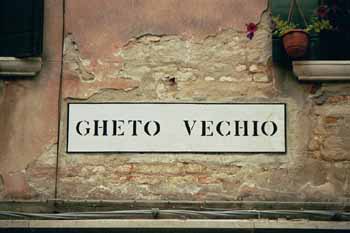
10, 1516
In
what was the first ghetto*, Jews in Venice, Italy, were forced
to live in a specific, restricted area of the city.
*
The word "ghetto" comes from the Venetian word "geto",
meaning foundry. Prior to becoming an exclusively Jewish neighborhood,
the Venice ghetto was the site of two foundries.
April
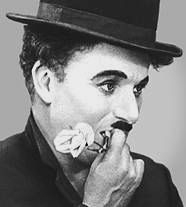
10, 1972
Charlie
Chaplin received an honorary Oscar for "the incalculable
effect he has had in making motion pictures the art form of
this century.” The British native’s political
views had been criticized, as had been his failure to apply
for U.S. citizenship. Pressed for back taxes and accused of
supporting subversive causes during the McCarthy era, Chaplin
left the United States in 1952. Informed that he would not
be welcomed back, he retorted, "I wouldn't go back there
if Jesus Christ were president." He returned briefly
from exile, however, to accept his award where he received
the longest standing ovation in Academy Award history, lasting
a full five minutes
April
10, 1981
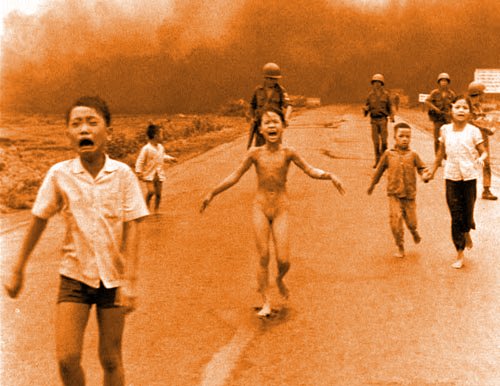
United Nations adopted a convention assuring no civilians
should be attacked with "napalm, mines or booby-traps."
The U.S. has refused to sign the treaty to this day.
This
Life photograph of a naked child running down a street in
Vietnam screaming in agony captures the effects of Napalm.
Nick Ut's photograph of Kim Phuk, taken in 1972, won the
Pulitzer Prize ( Associated Press).
April
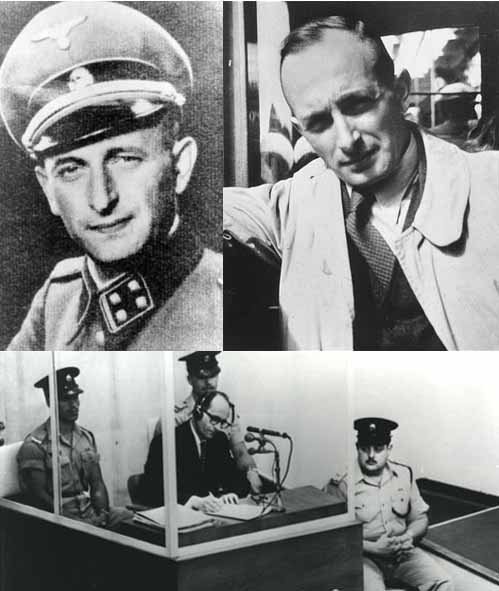
11, 1961
The trial of Nazi war criminal Adolf Eichmann began in Israel.
The man accused of leading Hitler’s effort to exterminate
the Jewish people and others faced 15 charges, including crimes
against humanity, crimes against the Jewish people, and war
crimes.
read
the charges
April
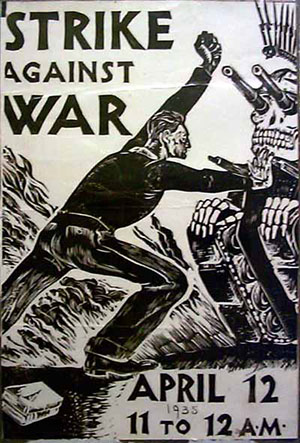
12, 1937
60,000
students across the U.S. took part in the first nationwide student
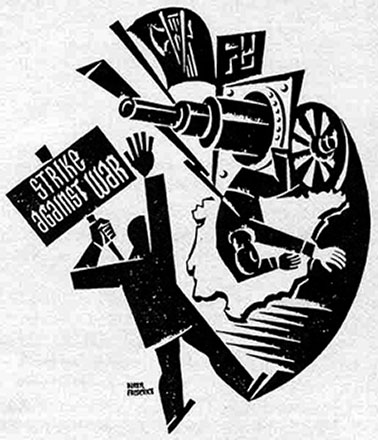
strike. The protest was against participation in any war.
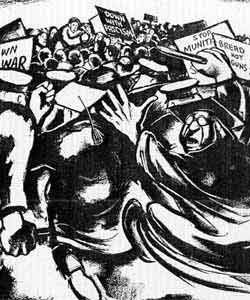
Posters
from the anti-war movement of the 1930's
April
12, 1971
The first European demonstration against nuclear power was held
in Fessenheim, France.
April
13, 1919
Socialist,
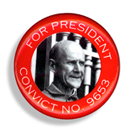
pacifist, and labor leader Eugene Debs was imprisoned for
opposing U.S. entry into World War I. While in prison, he
received nearly one million votes for President in 1920 (as
he had in 1912).
learn
more about Eugene Debs
April
13, 1919
In
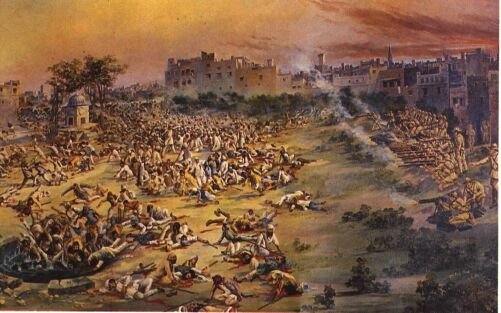
Amritsar, holiest city of the Sikh religion (in India’s
Punjab province), British and Gurkha troops killed at least
379 and wounded 1200 unarmed demonstrators meeting at the
Jallianwala Bagh, a city park. Most of those killed were Indian
nationalists meeting to protest the British government's forced
conscription and the heavy war tax it imposed upon the Indian
people. In the previous three days, two key Sikh leaders had
been deported, Ghandi had been barred from entering the Punjab,
and a general strike and demonstration had been met with deadly
fire from British troops, sparking violent reaction.
read
the background of the Amritsar massacre
April
13, 1962
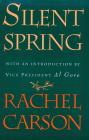
Rachel
Carson's book indicting the pesticide industry, "Silent
Spring," was published. The scientist and writer (17 years
with the U.S. Fish and Wildlife Service) demonstrated the connection
between the excessive and ubiquitous use of DDT and its long-term
effect on plants and animals.
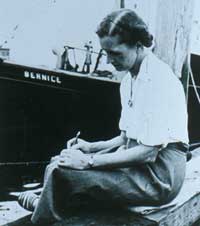
Rachel
Carson at work c. 1936
The
impact of her book proved seminal to a new ecological awareness.
But even 30 years later, Carson was denounced for "preservationist
hysteria" and "bad science." But she had said
when the book was published: "We do not ask that all chemicals
be abandoned. We ask moderation. We ask the use of other methods
less harmful to our environment"
April
14, 1968
A
massive student rally in West Berlin blocked the city's main
thoroughfare, the Kurfurstendamm. It ended in violent clashes
between police and the marchers. The students were protesting
the shooting a week earlier of one of their leaders, Rudi
Dutschke, outside the offices of the German Socialist Students
Federation (SDS).
April
14, 1988
The Soviet Union signed an agreement pledging to withdraw
its troops from Afghanistan.
April
15, 1947
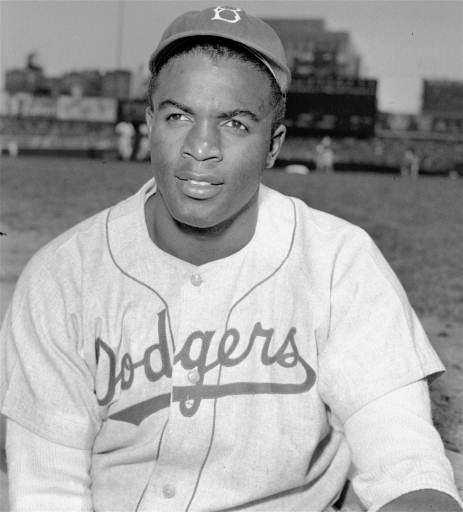
Jackie
Roosevelt Robinson became the first African-American to play
in a major league baseball game. His stepping onto Ebbets field
in a Brooklyn Dodgers uniform broke the "color line,"
segregation dating back 78 years to the nineteenth century.
The game, until a franchise moved to Atlanta in the mid-'60s,
had been played entirely in northern cities.
"Jackie
(Robinson), we've got no army. There's virtually nobody on our
side. No owners, no umpires, very few newspapermen. And I'm
afraid that many fans will be hostile. We'll be in a tough position.
We can win only if we can convince the world that I'm doing
this because you're a great ballplayer, a fine gentleman."...
"There was never a man in the game who could put mind and
muscle together quicker and with better judgment than (Jackie)
Robinson."
Branch Rickey, the courageous but canny Dodgers’ manager
who hired Robinson
April
15, 1967
Amidst growing opposition to the war in Vietnam, large scale
anti-war protests were held in New York, San Francisco and
other cities. In New York, the protest began in Central Park,
where over 150 draft cards were burned, and included a march
to the United Nations led by Rev. Martin Luther King, Jr.
read
the speech
Early
draft card burning.
April
15, 1968
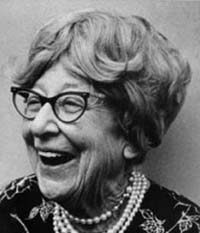
Ninety-year-old Jeanette Rankin, the first female member of
Congress, and the only one to vote against U.S. entry into
both World Wars, led 8,000 in protest of the Vietnam War in
the Women's peace march on the Pentagon.
more
about Jeanette Rankin
April
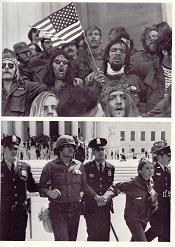
16, 1971
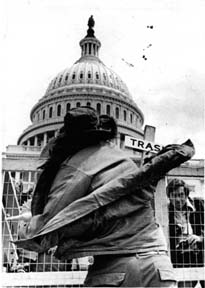
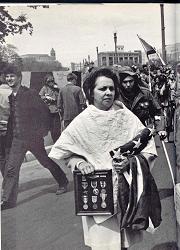
Members
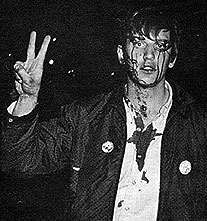
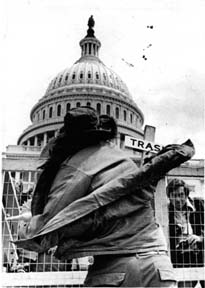
of Vietnam Veterans Against the War (VVAW) threw medals they
had earned in Vietnam on the U.S. Capitol steps in protest
of the Vietnam War.
read
more about the VVAW
April,
16, 1971
Internal Revenue Service (IRS) estimated over 2,000 people
openly refused to pay part or all of their income tax in protest
over the war in Vietnam.
National
War Tax Resistance Coordinating Committee
April
16, 2000
Some 20,000 global justice activists blockaded meetings of the
World Bank and International Monetary Fund in Washington, DC.
April
17, 1960
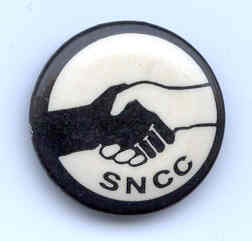
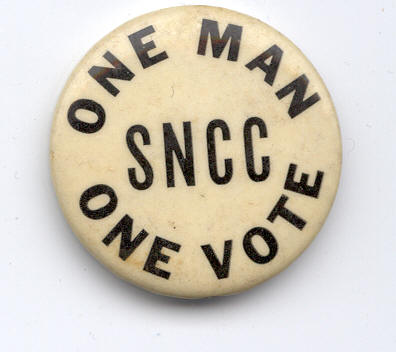
As
a response to the Greensboro sit-in, nearly 150 black students
from nine states formed the Student Nonviolent Coordinating
Committee (SNCC). Meeting in Raleigh, North Carolina, with
Ella Baker, James Lawson and Martin Luther King, Jr., the
founders set SNCC’s initial goals as overturning segregation
in the South and giving young blacks a stronger voice in the
civil rights movement. By that time, in mid-April 1960, over
50,000 students had participated in sit-ins over just the
previous three months.
read
a history of SNCC
April
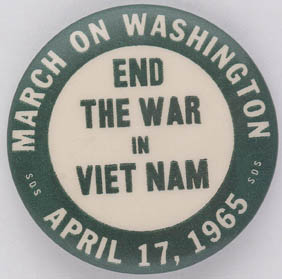
17, 1965
The first national demonstration against the Vietnam War took
place. Students for a Democratic Society (SDS), the organizers,
had expected about 2000 marchers; the actual count was about
25,000. This was the largest anti-war protest ever to have
been held in Washington, D.C. up to that time, with the number
of marchers approximately equalling the number of U.S. soldiers
in Vietnam. Several hundred students in the protest break
away from the main march and conduct a brief sit-in at the
U.S. Capitol’s door.
April
17, 1986
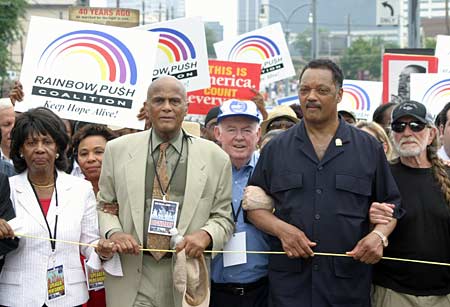
Rev Jesse Jackson, future congresswoman Maxine Waters and
others co-founded the Rainbow Coalition, initially intended
as a progressive public policy think tank within the Democratic
Party.
keep
hope alive
Maxine Waters, Harry Belafonte, John Sweeney,
Rev.Jesse
Jackson, and Willie Nelson
August
6, 2005-Atlanta, Georgia
April
18, 1941
Bus
companies in New York City agreed to hire black drivers and
mechanics workers after a four-week boycott.
April
18, 1958
First
march against nuclear arms in West Germany took place.
April
18, 1960
Tens
of thousands of people marked the end of the Aldermaston "ban
the bomb" march with a rally with at least 60,000 gathering
in Trafalgar Square, the largest demonstration London had
seen to date.
April
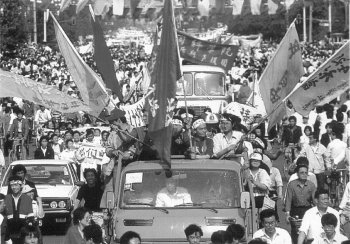
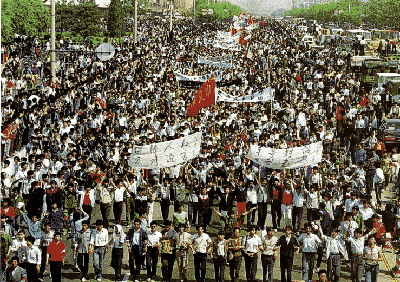
18, 1989
Thousands
of Chinese students took to the streets to protest government
policies and issue a call for greater democracy in the communist
People's Republic of China (PRC).
April
19, 1943
The
Warsaw Ghetto Uprising began when Nazi forces attempted to
clear out the Jewish ghetto in Warsaw, Poland, and were met
by unexpected gunfire from Jewish resistance fighters.
learn
more about The Warsaw Ghetto Uprising
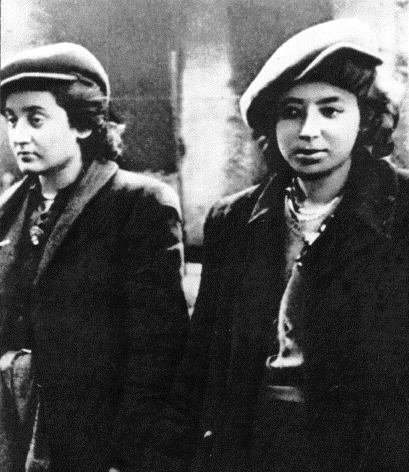
These
two women, soon to be executed, were members of the Jewish
resistance. "...Jews and Jewesses shot from two pistols
at the same time... The Jewesses carried loaded pistols in
their clothing with the safety catches off...At the last moment,
they would pull hand grenades out...and throw them at the
soldiers...."
Brief
Background on the Uprising:
The Warsaw Ghetto,the largest ghetto established by Nazi
Germany and in existence for three years, was the site of
one of the first mass uprisings in Nazi-occupied Europe.
The Nazis sealed the ghetto in 1940. Through disease,
Nazi-created starvation diets and deportations to concentration
camps and extermination camps, the population diminished
from 450,000 to 37,000.
The Nazis conducted mass deportations from July to September
1942. An underground resistance movement rose up in
response. Then came the second wave of deportations, resulting
in hand-to-hand resistance. The deportations continued
for a few more days, then ended, after which resisters,
weakened from disastrous conditions, united for the ultimate
uprising, which was a pivotal event in the history of Jewish
resistance to Nazi tyranny.
The Nazis began the final liquidation of the ghetto the
eve of Passover, April 19, 1943. Resisters held off the
Nazis for three weeks, using precious few and largely ineffectual
weapons, but they were determined to go out fighting, decrease
the number of Nazis, and hopefully serve to let the whole
world know of the plight of the Jews.
April
19, 1948
Costa
Rica abolished its army, choosing to spend the public funds
that would normally be used for military purposes on education
and medical services. This is judged to be a factor in the
nation’s never having fallen prey to corruption, dictatorships,
or the bloodshed that has marred the history of much of the
region.
April
19, 1971
As
a prelude to a massive anti-war protest, Vietnam Veterans
Against the War (VVAW) began a five-day demonstration in Washington,
D.C. The generally peaceful protest, called Dewey Canyon III
in honor of the operation of the same name conducted in Laos.
They lobbied their congressmen, laid wreaths in Arlington
National Cemetery, and staged mock "search and destroy"
missions.
(See
April 23, 1971 below)
April
19, 1997
Two Swedish Plowshares peace activists, Cecelia Redner, a
priest in the Church of Sweden, and Marija Fischer, a student,
entered the Bufors Arms factory in Karlskoga, Sweden, planted
an apple tree and attempted to disarm a naval canon being
exported to Indonesia.
“When
my country is arming a dictator I am not allowed to be passive
and obedient,
since
it would make me guilty to the crime of genocide in East Timor...”
- Cecelia Redner
Redner
was sentenced to fines and three years of correctional education.
Fischer was sentenced to fines and two years’ suspended
sentence.
Both the prosecutor and defendants appealed the case. No jail
sentences were imposed.
April
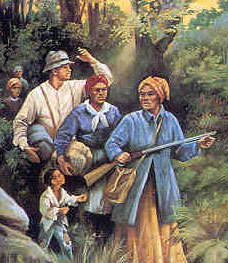
20, 1853
Harriet
Tubman began her Underground Railroad, a network of people
and places that aided in the escape of slaves to the north.
read
more
April
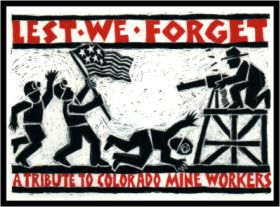
20, 1914
Troops
from the state militia, ending a bitter coal-miners' strike,
attacked a tent colony of strikers, killing 25 in Ludlow,
Colorado.
read
more about the Ludlow Massacre from
Howard Zinn's
A
PEOPLE' HISTORY OF THE UNITED STATES
April
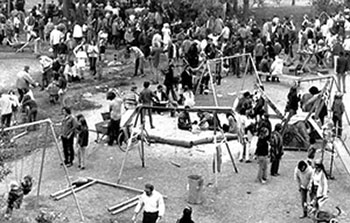
20, 1969
On the site of a parking lot owned by the University of California,
Berkeley a diverse group of people came together, each freely
contributing their skills and resources to create People’s
Park.
read
more
Long
live People's Park!
April
21, 1989
Six
days after the death of Hu Yaobang, the deposed reform-minded
leader of the Chinese Communist Party, some 100,000 students
from more than 40 universities gathered at Beijing's Tiananmen
Square to commemorate Hu, voice their discontent with China's
authoritative communist government, and call for greater democracy.
Ignoring government warnings of violent suppression of any mass
demonstration, the students were joined by workers, intellectuals,
and civil servants.
April
22, 1970
read
more about Earth Day
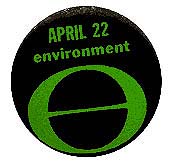
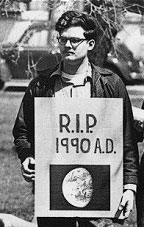
On
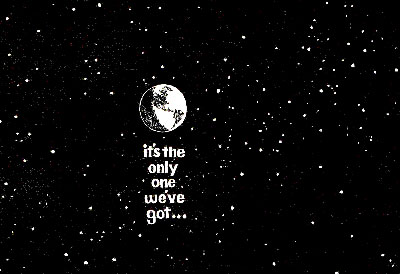
the First Earth Day observance, an estimated 20 million participated
in anti-pollution demonstrations across the U.S.
1st Earth Day, 1970
Ron Cobb
April
22, 1992
50,000
attended an anti-war rock concert in Belgrade, Serbia.
The title of the concert was ‘Don’t Count On Us’
– a message to the nationalist regime of President Milosevic.
read
more
April
23, 1968
Students at Columbia University in New York City occupied campus
buildings to protest war research and the razing of part of
the community in Harlem to make way for a new student gymnasium.
April
23, 1971
In the final event of Operation Dewey Canyon III, nearly 1,000
Vietnam War veterans threw their combat ribbons, helmets,
and uniforms on the Capitol steps along with toy weapons.
read
a chronology of Operation Dewey Canyon III
April
23, 1996
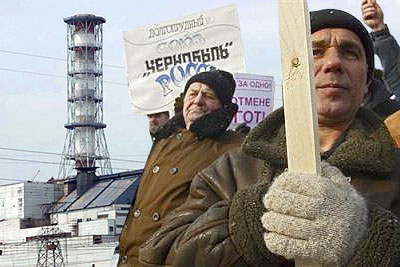
Nineteen
demonstrators were arrested in the capital, Kiev, during an
illegal anti-nuclear protest marking the 10th anniversary
of the nuclear accident at Chernobyl in the Ukraine.
Chernobyl
veterans
April
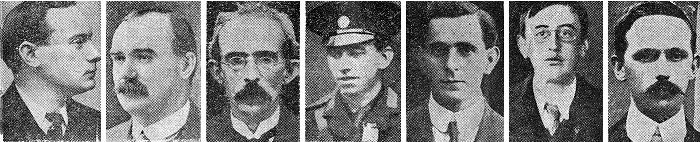
24, 1916
The
Easter Uprising began when between 1,000 and 1,500 members of
the Irish Republican Brotherhood attempted to seize Dublin and
issued the declaration of Irish independence from Britain.
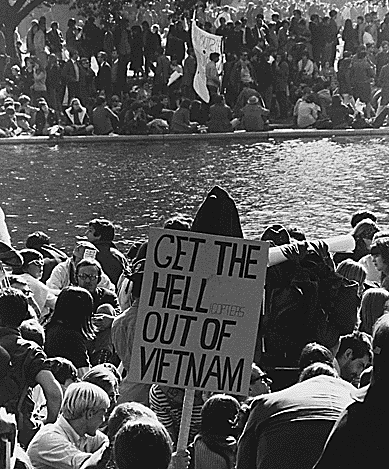
In
Washington DC, 500,000 demonstrated to oppose the U.S. war
in Southeast Asia.
150,000
march at a simultaneous rally in San Francisco.
April
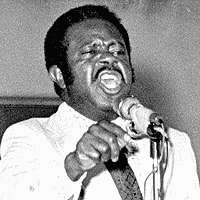
25, 1969
The
Rev. Ralph Abernathy and 100 others were arrested while picketing
a Charleston, South Carolina hospital to support unionization.
read
more about Rev Ralph Aberathy
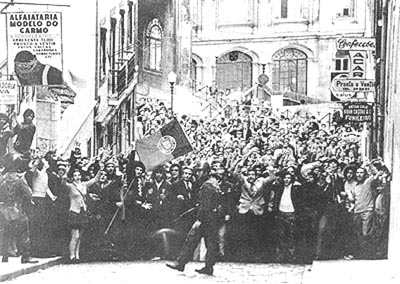
April
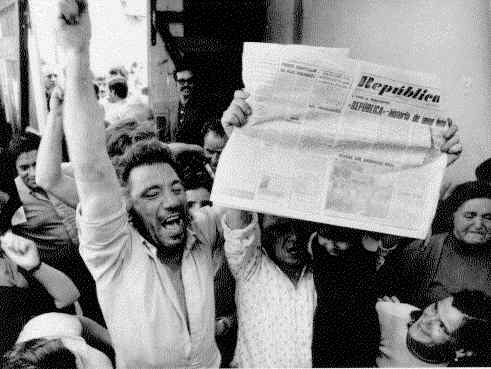
25, 1974
A
peaceful uprising by army and civilians ended 48 years of fascism
in Portugal.
Lisbon
demonstration '74
read
more
April
25, 1983
175 women were arrested for marching to mourn the rape of
women in war, Sydney and Melbourne, Australia.
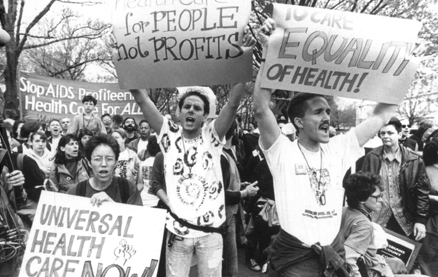
April
25, 1993
Over
one million marched for Lesbian, Gay and Bisexual rights and
liberation in Washington DC.
read
the march’s platform
Health
Care Rally at April 25, 1993
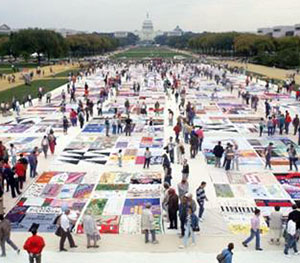
The
AIDS quilt on display as part of the event.
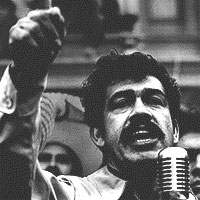
April
26, 1966
Rodolfo
"Corky" Gonzales founded the Crusade for Justice,
a Chicano activist group, in Denver, Colorado and marked his
departure from the Democratic party and the beginning of a
Nationalist strategy for the attainment of Chicano civil rights.
read more
Rodolfo
"Corky" Gonzales
April
26, 1968
A
national student strike against the Vietnam war enlisted as
many as one million high school & college students across
the U.S.
April
26, 1986
A
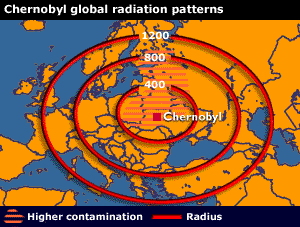
major accident occured at the Chernobyl nuclear power plant
in the Ukraine. The radiation cloud killed at least 31 immediately
and 40,000 were evacuated.
The explosion at Chernobyl was undoubtedly the world's greatest
nuclear accident. While only about 3% of the reactor core
escaped,
it was enough to kill those near it, and damage food and crops
worldwide. Much of Eastern Europe and Scandanavia was irradiated.
Subsequent deaths and illnesses from radiation exposure continue
to this day.
read
more
April
26, 1994
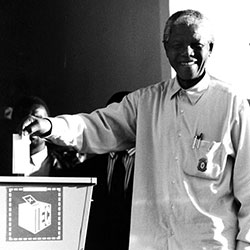
South Africa held its first multiracial elections and chose
anti-apartheid leader Nelson Mandela to head a new coalition
government that included his African National Congress Party.
read
more
Nelson
Mandela
April
26, 1998
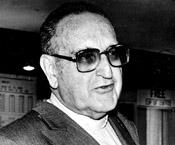
Bishop
Juan Gerardi Conedera
Bishop Juan Gerardi Conedera, a leading human rights activist
in Guatemala, was bludgeoned to death two days after a report
he had compiled was made public. The report blamed the U.S.
backed Guatemalan military governments for atrocities committed
during Guatemala's 36-year civil war.
in
2001 three military officers were convicted of the murder...read
more
April
27, 1936
The
UAW (United Automobile, Aerospace, and Agricultural Implement
Workers of America), gained autonomy from the AFL, becoming
the first democratic, independent labor union concerned with
the rights of unskilled and semi-skilled laborers.
April
27, 1937
The first Social Security payment was made.
the
social security debate today
April
27, 1989
Thousands
of Chinese students took to the streets in Beijing to protest
government policies and issued a call for greater democracy
in the communist People's Republic of China. The protests grew
until the Chinese government ruthlessly suppressed them in June
during what came to be known as the Tiananmen Square Massacre.
Ignoring government warnings of violent suppression of any mass
demonstration, students from more than 40 universities began
a march to Tiananmen on April 27.
The
students were joined by workers, intellectuals, and civil servants,
and by mid-May more than a million people filled the square.
April
28, 1978
At
the Rocky Flats nuclear weapons facility, near Denver, over
5,000 protested and 284 were arrested for blocking railroad
tracks entering the plant.
Photo
from the early 1980s, people circle the facility in protest.
April
29, 1915
The
International Congress of Women met at The Hague, Netherlands,
with more than 1,300 delegates from 12 countries—including
Britain, Germany, Austria-Hungary, Italy, Poland, Belgium
and the United States—all dedicated to the cause of
peace and a resolution of the great international conflict
that was World War I. This was the origins of the organization
known today as the Women's International League for Peace
and Freedom.
WILPF
history
April
30, 1917
The
American Friends Service Committee was founded.
AFSC
history
AFSC today
Quaker values in action
April
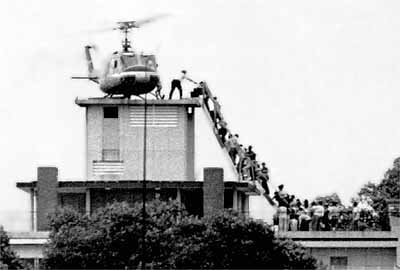
30, 1975
The
war in Vietnam ended as the government in Saigon announced
its unconditional surrender to the Vietcong and Vietnam is
reunited after 21 years of U.S. domination and 100 years of
French colonial rule.
Last
helicopter out of Saigon 4/30/75
April
30, 1996
About
120 activists were arrested over the next eight days in Washington,
D.C., in support of a White House fast by Sister Diana Ortiz.
Ortiz was kidnapped, tortured, & raped by U.S.-trained
& supported Guatemalan Army officers in 1989. She was
fasting to demand that the U.S. government release information
on her assailants.
This
Week In History compiled by peacebuttons.info from various
sources
which are available upon request.
Submissions are always welcome. Please furnish sources. cb@peacebuttons.info
Reproduction
of this calendar for non-profit purposes
is permitted and encouraged. Please credit/link to www.peacebuttons.info










 1st Earth Day, 1970