8000 anti-war marchers demonstrated in Boston. Their banners
read:
“IS
THIS A POPULAR WAR, WHY CONSCRIPTION?
WHO STOLE PANAMA? WHO CRUSHED HAITI?
WE DEMAND PEACE.”
The parade was attacked by soldiers and sailors, on orders
from their officers.
July
1, 1944
A
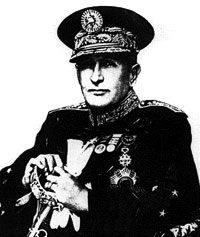
massive general strike in Guatemala led to the resignation
of dictator Dictator Jorge Ubico who had harshly ruled Guatemala
for over a decade.
Jorge
Ubico
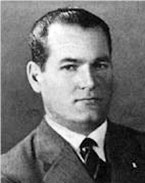
On
March 15 of the next year, Dr. Juan Jose Arevalo Bermejo took
office as the first popularly elected President of Guatemala
and promptly called for democratic reforms establishing the
nation’s social security and health systems, land reform
(redistribution of farmland not under cultivation to the landless
with compensation to the owners), and a government bureau
to look after Mayan concerns.
Juan
José Arévalo Bermejo
July
1, 1968
Sixty-one nations, including the United States, Britain and
the Soviet Union, signed the Treaty on the Non-Proliferation
of Nuclear Weapons (NPT) which set up systems to monitor use
of nuclear technology and prevent more nations from acquiring
nuclear weapons. 190 countries are now signatories; Israel,
India and Pakistan remain outside the Treaty. North Korea
joined the NPT in 1985, but in January 2003 announced its
intention to withdraw from the Treaty.
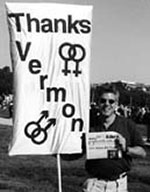
July
1, 2000
Vermont's civil unions law went into effect, granting gay
couples most of the rights, benefits, protections and responsibilities
of marriage under state law. In the first five years, 1,142
Vermont couples, and 6,424 from elsewhere, had chosen a Vermont
civil union.
July
2, 1809
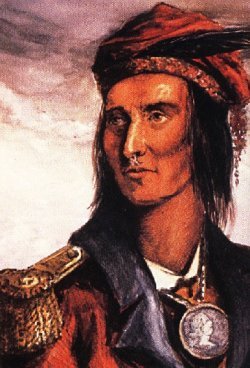
Alarmed by the growing encroachment of whites squatting on
Native American lands, the Shawnee Chief Tecumseh called on
all Indians to unite and resist. By 1810, he had organized
the Ohio Valley Confederacy, which united Indians from the
Shawnee, Potawatomi, Kickapoo, Winnebago, Menominee, Ottawa,
and Wyandotte nations.
For
several years, Tecumseh's Indian Confederacy successfully
delayed further white settlement in the region.
Chief
Tecumseh
July
2, 1839
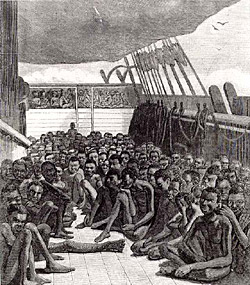
Slave
ship
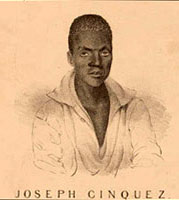
Early in the morning, Africans on the Cuban slave ship Amistad,
led by Joseph Cinquè (a Mende from what is now Sierra
Leone), mutinied against their captors, killing the captain
and the cook, and seized control of the schooner. Jose Ruiz,
a Spaniard and planter from Puerto Principe, Cuba, had bought
the 49 adult males on the ship, paying $450 each, as slaves
for his sugar plantation.
read
more
Joseph
Cinquè
July
2, 1964
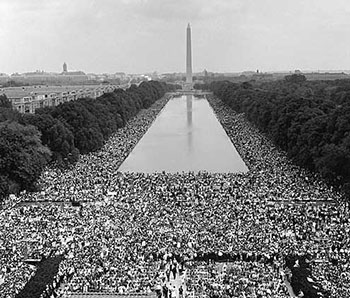
Massive demonstrations a year earlier had helped ensure passage
of the Act.
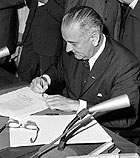
U.S.
President Lyndon B. Johnson signed the Civil Rights Act of
1964 into law, thus barring discrimination in public accommodations,
employment, and voting. The law had survived an 83-day filibuster
in the U.S. Senate by southern members.
"We
have lost the South for a generation," said Pres. Johnson
to an aide, immediately after signing the Act.
July
3, 1835
Children
working in the silk mills at Paterson, New Jersey, went on strike
for an eleven-hour day and a six-day work week. With the help
of adults, they won a compromise settlement of a 69-hour week.
July
3, 1966
At
least 31 people were arrested in London after their protest
against the Vietnam War turned violent. Police moved in after
scuffles broke out at the demonstration outside the U.S. Embassy
in Grosvenor Square.
read
more
Actress
Vanessa Redgrave joins 25,000 two years later at Anti-Vietnam
war protest, Grosvenor Square.
July
4, 1776
The
U.S. Declaration of Independence from England began the first
successful anti-imperial revolution in world history. Signed
in Philadelphia by 56 British subjects who lived and owned
property in thirteen of the American colonies, the document
asserted the right of a people to create its own form of government.
The signers were members of the 2nd Continental Congress which
had voted two days earlier for independence from the monarchy
and King George III.
Read
the Declaration
On
July 4, 1776, the Second Continental Congress unanimously
adopted the Declaration of Independence.
July
4, 1966
The
Freedom of Information Act, P.L. 89-487, became law. It established
the right of Americans to know what their government is doing.
July
4, 1969
"Give
Peace a Chance" by the Plastic Ono Band was released
in the United Kingdom.
Some facts about "Give Peace a Chance"
This song was recorded May 31, 1969 during
a "Bed-In" John Lennon and Yoko Ono staged at the
Queen Elizabeth's Hotel in Montreal. John and Yoko stayed
in bed for 8 days, beginning May 26, in an effort to promote
world peace.
Some of the people in the hotel room who sang on this were
Tommy Smothers,Timothy Leary, Allen Ginsberg, and Petula Clark.
Smothers also played guitar.This event promoting peace received
a great deal of media attention
July
4, 1969
A national anti-war conference in Cleveland, Ohio, mapped
out activities against the Vietnam War and resulted in the
founding of New Mobe (mobilization).
During
a strike against the Pullman Palace Car Company for having
laid off about a quarter of its employees and drastically
reduced wages, the 1892 World's Columbian Exposition in Chicago's
Jackson Park was set ablaze, and seven buildings were reduced
to ashes. The Pullman workers’ cause had been taken
up by Eugene V. Debs, the leader of the American Railway Union
helped organize a nationwide boycott of any train that included
a Pullman car.
read
the Pullman Strikers’ Statement
read more
July
5, 1935
The
National Labor Relations Act became law, recognizing workers' rights
to organize and bargain collectively. The bill was signed
into law by President Franklin D. Roosevelt on this day.
read
more about the act
July
5, 1989
Former
National Security Council aide Oliver North received a $150,000
fine and a suspended prison term for his part in the Iran-Contra
scandal. That was a secret arrangement directed from the Reagan
White House that provided funds to the Nicaraguan contra rebels
(in contravention of specific congressional prohibition) from
profits gained by selling arms to Iran (at war with Iraq at
the time) in hopes of their releasing hostages, despite Pres.
Reagan’s claim that he wouldn’t trade arms for
hostages.
The convictions were later overturned because evidence revealed
in the congressional Iran-Contra hearings had compromised
his right to a fair trial.
more
on "Ollie"
July
6, 1892
In
one of the worst cases of violent union-busting, a fierce
battle broke out between the striking employees of Andrew
Carnegie’s steel company, and a Pinkerton Detective
Agency private army brought on barges down the Monongahela
River in the dead of night. Twelve were killed. Henry C. Frick,
general manager of the plant in Homestead, near Pittsburgh,
Pennsylvania, had been given free reign by Carnegie to quash
the strike. At Frick's request, Pennsylvania Governor Robert
E. Pattison then sent 8,500 troops to Homestead to intervene
on behalf of the company.
read
more
July
6, 1942
In
Nazi-occupied Holland, thirteen-year-old Jewish diarist Anne
Frank and her family were forced to take refuge in a secret
sealed-off area of an Amsterdam warehouse under threat of
arrest and deportation to concentration camp by the Einsatzgruppen
(Task Force), a part of the German Gestapo.
read
more
July
6, 1944
Irene Morgan, a 28-year-old black woman, refused to move to
the back of the bus eleven years before Rosa Parks. Her appeal,
after her conviction for breaking a Virginia law forbidding
integrated seating, resulted in a 7-1 Supreme Court decision
barring segregation in interstate commerce.
read
more
July
7, 1903
July
7, 1903
Labor organizer Mary Harris ("Mother") Jones led
the "March of the Mill Children" over 100 miles
from Philadelphia to President Theodore Roosevelt's summer
home in Oyster Bay, Long Island, New York to publicize the
harsh conditions of child labor and to demand a 55-hour work
week. It is during this march, on about the 24th, she delivered
her famed "The Wail of the Children" speech. Roosevelt
refused to see them.
the
March of the Mill Children
“Fifty
years ago there was a cry against slavery and men gave up
their lives to stop the selling of black children on the block.
Today the white child is sold for two dollars a week to the
manufacturers.” from
Mother Jones’s autobiography
read
more about Mother Jones
July
7, 1957
Scientists held their first peace conference in the village
of Pugwash, Nova Scotia, Canada. The mission of the Pugwash
conference was to “... bring scientific insight and
reason to bear on threats to human security arising from science
and technology in general, and above all from the catastrophic
threat posed to humanity by nuclear and other weapons of mass
destruction....”
Pugwash
home
July
7, 1977
The United States conducted its first test of the neutron bomb.
The neutron bomb was a tactical thermonuclear weapon designed
to cause very little physical damage through limited blast and
heat but was designed to kill troops through localized but intense
levels of lethal radiation.
a
neutron bomb explosion at a test site
July
7, 1979
2,000
American Indian activists and anti-nuclear demonstrators marched
through the Black Hills of western South Dakota to protest
the development of uranium mines on native sacred lands.
July
8, 1917
The
Women's Peace Crusade organized a Sunday mass demonstration
in Glasgow; from two sides of the city processions wound their
way toward Glasgow Green accompanied by bands and banners.
They merged into one massive colorful demonstration of some
14,000 people protesting World War I.
read
more
July
8, 1959
Vietnamese guerillas ambushed two U.S. "advisers,"
making them the first U.S. casualties since 1946 in Vietnam.
July
8, 1965
Roy
Wilkins became the executive director of NAACP, the National
Association for the Advancement of Colored People. He had
edited the organization’s magazine, Crisis, for fifteen
years, and was one of the most articulate of civil rights
leaders.
the
Roy Wilkins Memorial in Minneapolis
July
8, 1996
The
International Court Of Justice declared that in almost all circumstances
use of nuclear weapons is illegal.
July
9, 1917
During
World War I, Emma Goldman and Alexander Berkman, leaders of
the No-Conscription League, spoke out against the war and
the draft. Both were found guilty in New York City of conspiracy
against the draft, fined $10,000 each and sentenced to two
years’ imprisonment with the possibility of deportation
at the end of their terms.
more
about Emma and Alex
July
9, 1955
Albert
Einstein
Albert
Einstein, Bertrand Russell and seven other scientists warned
that the development of weapons of mass destruction had created
a choice between war and survival of the human species. The
Russell-Einstein Manifesto was published in London .
read
the manifesto
Bertrand
Russell
“We
have to learn to think in a new way. We have to learn to ask
ourselves ...
what
steps can be taken to prevent a military contest of
which
the issue must be disastrous to all parties?”
July
17, 1927
In
the first-ever aerial military bombing of a civilian population,
a U.S. Marine squadron of seven airplanes killed 300 at Ocatal,
Nicaragua.
July
17, 1976
The opening ceremony of the 21st Olympic games in Montreal
is marked by the withdrawal of 25 African countries and some
300 participants, protesting the presence of the South African
team which had been banned from the Olympics since 1964 for
its refusal to end their racially separatist policy of apartheid.
July
17, 1979
Fighters
of the Sandinista National Liberation Front overthrew the
U.S.-supported dictatorial regime of Anastasio Somoza in the
Central American republic of Nicaragua and forced him to flee
the country. The notorious U.S.-trained National Guard crumbled
and its surviving commanders negotiated a surrender, despite
their superiority in armaments.
read
more
Girls
born after the historic Sandinista victory.
Legal voting age in Nicaragua is 16 years.
July
18, 1918
Nelson
Mandela was born. He was one of the leaders in the fight against
apartheid in South Africa and became its first black president.
In 1993 he was awarded the Nobel Peace Prize.
read
more about Nelson Mandel
July
19, 1848
The
first Women's Rights Convention in the U.S. was held at Seneca
Falls, New York. Its "Declaration of Sentiments"
launched the women's rights movement. The Declaration used
the model of the U.S. Declaration of Independence, demanding
that the rights of women as individuals be acknowledged and
respected by society. It was signed by sixty-eight women and
thirty-two men.
read
about the convention
read the declaration
July
19, 1974
Martha
Tranquill of Sacramento, California, was sentenced to nine
months’ jail time for refusing to pay her federal
taxes as a protest against the Vietnam War.
July
19, 1993
President
Clinton announced regulations to implement his "Don't
Ask, Don't Tell" policy regarding gays in the military,
saying that the armed services should put an end to “witch
hunts.” The policy was developed by Colin Powell,
then Chair of the Joint Chiefs of Staff, and eventually
summarized as “don’t ask, don’t tell,
don’t pursue, don’t harass.”
more
about the policy
July
19, 2000
A
federal administrative law judge ordered white supremacist
Ryan Wilson to pay $1.1 million in damages to fair housing
advocate Bonnie Jouhari and her daughter, Dani. The decision
stemmed from threats made against Jouhari by Wilson and his
Philadelphia neo-Nazi group, ALPA HQ.
Bonnie
and Dani Jouhari
July
20, 1967
The
first Black Power conference was held in Newark, New Jersey,
calling on black people in the U.S. "to unite, to recognize
their heritage and to build a sense of community."
read
more
July
20, 1971
The
first labor contract in the history of the federal government
was signed by postal worker unions and the newly re-organized
U.S. Postal Service through the collective bargaining process.
read
about the history of the
APWU
(American Postal Workers Union)
July
21, 1878
Publication
of "Eight Hours," written by Rev. Jesse H. Jones
(music) IG Blanchard (lyrics), the most popular labor song
until "Solidarity Forever" was published by the
IWW in 1915.
“Eight
hours for work, eight hours for rest;
Eight hours for what we will.”
all
the lyrics
July
21, 1925
The
so-called "Monkey Trial" ended in Dayton, Tennessee,
with high school teacher John T. Scopes convicted of violating
state law for teaching Darwin's theory of evolution. Referred
to as “the trial of the century” even before it
started, it was the first trial ever broadcast (on radio).
The conviction was later overturned.
The
Verdict: Thou Shall Not Think
John
T. Scopes
July
21, 1954
Major
world powers, meeting in Geneva Switzerland, reached agreement
on the terms for a ceasefire in Indochina, ending nearly eight
years of war. The war began in 1946 between nationalist forces
of the Communist Viet Minh, under leader Ho Chi Minh, and
France, the occupying colonial power.
The Geneva conference included France, Britain, the USA, the
USSR, China, and other countries of Indochina. It ended with
a peace treaty that called for independence for Vietnam a
1956 election to unify the country. However, only France and
Ho Chi Minh's DRV (Democratic Republic of Vietnam) signed
the document.
The United States did not approve of the agreement. Instead,
they backed the Diem government in South Vietnam and refused
to allow the elections knowing, in President Eisenhower’s
words, that “Ho Chi Minh will win.” The result
was the Second Indochina War, more commonly known as the Vietnam
War.
read
more
July
22, 1756
The
Friendly Association for Peace was founded in Philadelphia.
It was comprised primarily of Quakers who wished to pursue
peaceful coexistence between American Indians and people of
the Pennsylvania region.
read
more
July
22, 1877
A
general strike, part of the railroad strike that had paralyzed
the country, was called in St. Louis, where workers briefly
seized control of the city.
read
more about the 1877 general strike
July
23, 1846
Author Henry David Thoreau was jailed for refusing to pay
the poll tax as a protest against the Mexican war, which led
to his writing "Civil Disobedience." This essay
became a source of inspiration for Leo Tolstoy, Mahatma Gandhi,
and Martin Luther King, Jr.
From
Thoreau’s essay: “Unjust laws exist: shall we
be content to obey them, or shall we endeavor to amend them,
and obey them until we have succeeded, or shall we transgress
them at once?”
“Under a government which imprisons unjustly, the true
place for a just man is also a prison.”
read
the entire essay
Henry
David Thoreau
Thomas
Corwin of Ohio denounced the war as merely the latest example
of American injustice to Mexico: "If I were a Mexican
I would tell you, "Have you not room enough in your own
country to bury your dead." Henry Clay declared, "This
is no war of defense, but one of unnecessary and offensive
aggression."
Out
of Thoreau's jailing grew a legend: The great Ameriacan philosopher
Ralph Waldo Emerson visited Thoreau in jail. Emerson asked,
"Henry, why are you here?" Thoreau replied, "Why
are you not here?"
read
the whole story
July
24, 1974
The
United States Supreme Court (U.S. v. Nixon) unanimously ordered
President Nixon to surrender tape recordings of White House
conversations about the Watergate affair. Speaking
for the Supreme Court in front of a packed and hushed courtroom,
Chief Justice Warren E. Burger rejected President Nixon's
claims of executive privilege (virtually total confidentiality)
because the need for fair administration of criminal justice
must prevail.
The White House feared review of the recordings by a U.S.
district judge would reveal, among other crimes, impeachable
offenses.
Great
resources (including for teaching) on this case:
July
24, 1983
Canadians
and Americans crossed the international border at Thousand
Islands Bridge, linking New York and Ontario, to protest nuclear
weapons and border harassment of peace activists.
Thousand
Islands Bridge
July
24, 1983
Women tagged a U.S. warplane with anti-nuclear graffiti at
Greenham Common, an air base in England. The Greenham Common
Women's Peace Camp was started in 1981 to get U.S. Cruise
missiles out of their country. Tactics included disrupting
construction work at the base, blockading the base and cutting
down parts of the fence.
read
more about The Greenham Common Women's Peace Camp
photo:
Isia Brecciaroli
July
25, 1898
With
16,000 troops, the United States invaded Puerto Rico at Guánica
and other towns, overthrowing the government, asserting that
they were liberating the inhabitants from Spanish rule. The
island, as well as Cuba and the Philippines, were spoils of
the Spanish-American War which ended the following month.
N.Y.
17th Volunteer Regiment marching through Puerto Rico
Puerto
Rico remains a U.S. commonwealth today.
Famed American poet Carl Sandburg saw active service in Puerto
Rico, beginning with the invasion in Guánica. Sandburg
wrote about these experiences in his book entitled “Always
the Young Strangers” (New York: Harcourt,
Brace, 1953).
July
25, 1946
The
first underwater atomic device was detonated at Bikini Atoll,
part of the Marshall Islands in the South Pacific. It was
the second of two bombs, Able and Baker, that comprised Operation
Crossroads; each weapon had a yield equivalent to 23,000 tons
of TNT. The U.S. Navy conducted the tests to determine the
effect of such weapons on ships at sea.
read
more
More
than 130 newspaper, magazine and radio correspondents from
seven nations were present for the tests.
Gallery
of U.S. Navy artwork from Operation Crossroads:
July
25, 1963
The
Limited Test Ban Treaty was initialed following 10 days
of intense negotiations among U.S.S.R.*, U.S. and Britain.
The treaty prohibits nuclear weapons tests "or any
other nuclear explosion" in the atmosphere, in outer
space, and under water; it does not ban underground tests.
The nuclear powers (only three then, almost ten today) accepted
as a common goal "an end to the contamination of man's
environment by radioactive substances." 108 countries
have signed the treaty so far.
*
Union of Soviet Socialist Republics, commonly referred to
as the Soviet Union, included Russia and 14 countries and
was dissolved in the early ‘90s.
July
25, 1965
Martin
Luther King, Jr., joined protests against housing segregation
in Chicago. SCLC (Southern Christian Conference) joined with
the Coordinating Council of Community Organizations (CCCO),
led by Al Raby, a Black schoolteacher, in the The Chicago
Freedom Movement.
read
more
more on the CCCO
Martin
Luther King talks to Al Raby of Chicago's Coordinating Council
of Community Organizations (CCCO)
as
they lead the march down State Street.
To
King's right is Jack Spiegel of the United Shoeworkers,
and to Raby's left is King assistant Bernard Lee.
July
26, 1920
Women
throughout the U.S. won the right to vote when the Tennessee
legislature approved the 19th amendment to the U.S. Constitution.
Wyoming had granted suffrage in 1890 and several states followed.
But the amendment had been introduced annually for 41 years
and had gotten two-thirds of Congress to approve it just the
year before.
read
more
In
the Tennessee House, 24-year-old Harry Burn surprised observers
by casting the deciding vote for ratification. At the
time of his vote, Burns had in his pocket a letter he had
received from his mother urging him, "Don't forget to
be a good boy" and "vote for suffrage."
July
26, 1990
The Americans with Disabilities Act (ADA) was signed into
law by Pres. George H.W. Bush. It prohibits discrimination
based on disability in employment, in public accommodation
(e.g., hotels, restaurants, retail stores, theaters, health
care facilities, convention centers, parks), in transportation
services, and in all activities of state and local governments.
July
27, 1953
After
three years of bloody and frustrating war leading to stalemate,
the United States, the People's Republic of China, North Korea,
and South Korea agreed to a truce, bringing the Korean War
- and America's first experiment with the Cold War concept
of "limited war" - to an end. The armistice signed
that day ended hostilities and created the 4000-meter-wide
demilitarized zone (DMZ) as a buffer between North and South
Korean forces, but was not a permanent peace treaty. North
Korea still considers itself at war with the U.S.
Korean
War Memorial
photo:
Heather Stanfield
There were four million military and civilian casualties, including
16,000 UN allied, 415,000 South Korean, and 520,000 North Korean
dead. There were also an estimated 900,000 Chinese casualties.
36,576 died out of the 1.8 million Americans who served in the
conflict.
July
27, 1954
The
democratically elected Guatemalan government of Jacobo Arbenz
Guzmán was overthrown by CIA-paid and -trained mercenaries,
making way for the U.S. to install a series of military dictatorships
that waged a genocidal war against the indigenous Mayan Indians
and against political opponents into the ‘90s. Nearly
200,000 citizens died over the nearly four decades of civil
war.
“They
have used the pretext of anti-communism. The truth is very
different. The truth is to be found in the financial interests
of the fruit company [United Fruit] and the other US monopolies
which have invested great amounts of money in Latin America
and fear that the example of Guatemala would be followed by
other Latin countries ... I took over the presidency with
great faith in the democratic system, in liberty and the possibility
of achieving economic independence for Guatemala.”
read more
Jacobo
Arbenz
July
27, 1996
Known as the "Weep and Disarm for Children Plowshares,"
four women were arrested for pouring their own blood on weaponry
at the Naval Submarine Base at Groton, Connecticut, on the
morning of the launch of the last new Trident submarine, the
U.S.S. Louisiana.
read
more about the Weep for Children Plowshares
Trident
sub being loaded
July
28, 1868
Passed
in the wake of the Civil War, the Fourteenth Amendment to
the U.S. Constitution, guaranteeing due process, equal protection
of the law, and citizenship to former slaves, went into effect.
read
more
The
text of the amendment:
July
28, 1932
Federal
troops, under command of General Douglas MacArthur, forcibly
dispersed the so-called ''Bonus Expeditionary Force,'' or
Bonus Army. They were World War I veterans who had gathered
in Washington, D.C., to demand money they weren't scheduled
to receive until 1945. Most of the marchers were unemployed
veterans in desperate financial straits during the Great Depression.
read
more
watch a video
July
28, 1965
President
Lyndon Johnson ordered 50,000 troops to Vietnam to join the
75,000 already there. By the end of the year 180,000 U.S.
troops will have been sent to Vietnam; in 1966 the figure
doubled. By the summer of 1967, 80,000 Americans had been
killed or wounded in the Vietnam War in addition to countless
Vietnamese. President Johnson explained: "We intend to
convince the communists that we cannot be defeated by force
of arms or by superior power."
Lyndon
Johnson told the nation
Have no fear of escalation
I am trying everyone to please
Though it isn’t really war
We’re sending fifty thousand more
To help save Vietnam from Vietnamese
-anti
Vietnam war
protest
song
July
28, 1982
San
Francisco became the first U.S. city to ban the sale and possession
of handguns.
July
29, 1970
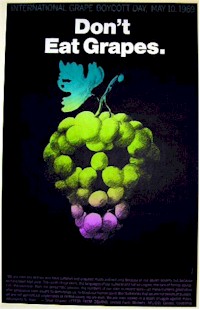
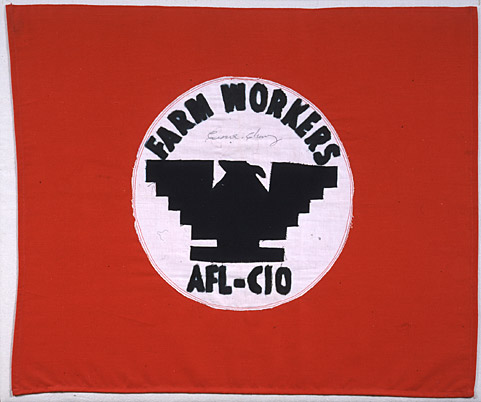
After
a five-year strike, the United Farm Workers (UFW) signed a
contract with the table grape growers in California, ending
the first grape boycott.
read
more
July
29, 1972
Supreme
Court ruled the death penalty is cruel and unusual punishment
by a 5-4 vote. The Court called the wide discretion in application
of capital punishment, including the appearance of racial bias
against black defendants, “arbitrary and capricious”
and thus in violation of due process guarantees in the 14th
Amendment [see
July 28, 1868 above].
July
30, 1996
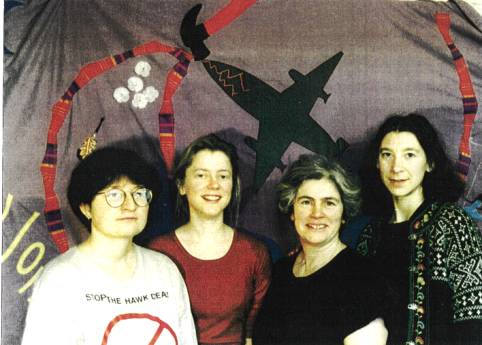
Four
Ploughshares activists in Liverpool, England, were acquitted
of all charges on the basis of preventing a greater crime,
after having extensively damaged an Hawk fighter jet set to
be sold to the Indonesian government for use in its genocidal
occupation of East Timor.
read
more
a
chronology of plowshares disarmament actions
July
31, 1896
The National Association of Colored Women (NACW) was established
in Washington. Its two leading members were Josephine Ruffin
and Mary Church Terrell. Founders also included some of the
most renowned African-American women educators, community
leaders, and civil-rights activists in America, including:
Harriet Tubman, Frances E.W. Harper, Margaret Murray Washington,
Ida B. Wells-Barnett.
read
more
Mary
Church Terrell
The
original intention of the organization was "to furnish
evidence of the moral, mental and material progress made by
people of colour through the efforts of our women.”
However, over the next ten years the NACW became involved
in campaigns favoring women's suffrage and opposing lynching
and Jim Crow laws. By the time the United States entered the
First World War, membership had reached 300,000.
read
more
July
31, 1986
25,000
people rallied in Namibia for freedom from South African colonial
rule. In June 1971, the International Court of Justice had
ruled that the South African presence in Namibia was illegal.
Finally, open elections for a 72-member Constituent Assembly
were held under UN supervision in November, 1989. Three months
later Namibia gained its independence, and maintains it today.
read
more
Learn
more about peacemakers in Africa:
Namibian
flag
July
31, 1991
The United States and the Soviet Union, represented by Pres.
George H.W. Bush and General Secretary Mikhail Gorbachev,
signed the Strategic Arms Reduction Treaty, known as START
I. It was the first agreement to actually reduce (25-35%)
and verify both countries’ stockpiles at equal aggregate
levels in strategic offensive arms.
The Soviet Union dissolved several months later, but Russia
and the U.S. met their goal by December 2001. Three other
former republics of the U.S.S.R., Kazakhstan, Belarus, and
Ukraine, have eliminated these weapons from their territory
altogether.
read
more about Strategic Arms Reduction Treaty (START I)
This
Week In History compiled by peacebuttons.info from various
sources
which are available upon request.
Submissions are always welcome. Please furnish sources. cb@peacebuttons.info
Reproduction
of this calendar for non-profit purposes
is permitted and encouraged. Please credit/link to www.peacebuttons.info








 Namibian
flag
Namibian
flag