Australia
abolished peace-time compulsory military training.
November
1, 1954
The
north African nation of Algeria began a war of independence
against French colonial rule.
read
more
French
troops clash with Algerian civilians
November
1, 1961
50,000
women joined protests against the resumption of atmospheric
nuclear tests.
The
demonstrations, in at least 60 U.S. cities, led to founding
of Women Strike for Peace.
read
more
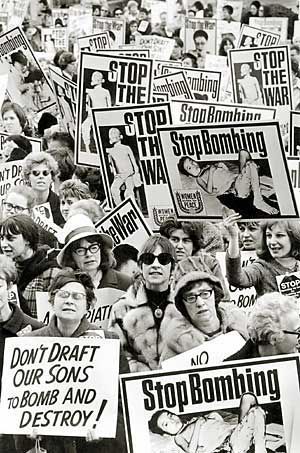
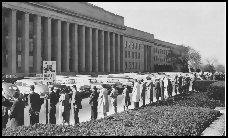
“Women's
Strike for Peace" storming the Pentagon in a 1967 protest
against the war in Vietnam.
November
1, 1970
The
Detroit City Council voted for immediate withdrawal of U.S.
armed forces
from
Vietnam.
November
1, 1990
As
part of the adoption of the International Law of the Sea, forty-three
nations agreed to ban dumping industrial wastes at sea by 1995.
Neither the U.S. or Canada (along with Albania, Burundi, Ethiopia,
Uzbekistan and San Marino) have ever ratified the treaty which
thus lacks the force of federal law.
November
1, 2003
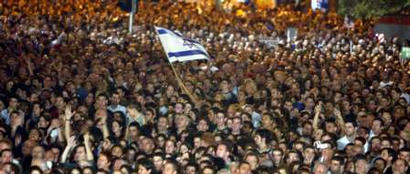
A Tel Aviv memorial for Israeli leader Yitzhak Rabin, slain
eight years previously, was transformed into a peace rally
with over 100,000 protesting the military policies of Prime
Minister Ariel Sharon.
read
more
November
2, 1972
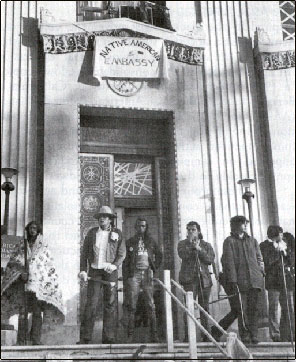
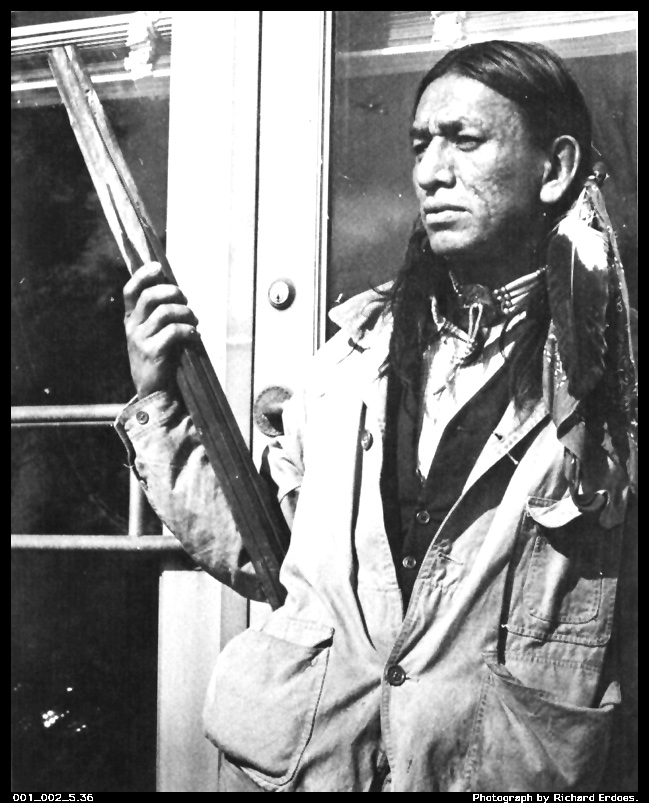
Five hundred protesters from the "Trail of Broken Treaties,"
a Native American march, occupied the Bureau of Indian Affairs
offices (part of the Department of Interior) in Washington,
D.C., for six days. Their goal was to gain support from the
general public for a policy of self-determination for American
Indians.
read
more
November
2, 1983
A bill designating a federal holiday honoring Dr. Martin Luther
King, Jr. (to be observed on the third Monday of January)
is signed by President Ronald Reagan. King was born in Atlanta
in 1929, the son of a Baptist minister. He received a doctorate
degree in theology and in 1955 King organized the first major
protest of the civil rights movement: the successful Montgomery
Bus Boycott. Influenced by Mohandas Gandhi, he advocated nonviolent
civil disobedience of the laws that enforced racial segregation.
MLK
Day by Coretta Scott King
the
history of Martin Luther King Day
(pdf)
November
3, 1883
The
U.S. Supreme Court in its decision Ex Parte Crow Dog, declared
Native Americans were subject to U.S. law, “not in the
sense of citizens, but … as wards subject to a guardian
… as a dependent community who were in a state of pupilage.”
more
on Chief Crow Dog
Chief
Crow Dog, 1898
November
3, 1917
Bolshevik
revolution takes power in Moscow, Russia.
November
3, 1969
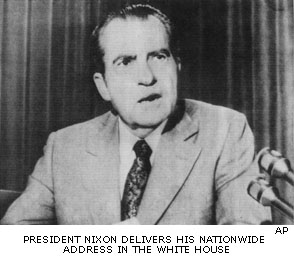
President
Nixon announced the "Vietnamization" program to
shift fighting by U.S. troops to U.S.-trained Vietnamese troops.
“We have adopted a plan which we have worked out in
cooperation with the South Vietnamese for the complete withdrawal
of all U.S. combat ground forces, and their replacement by
South Vietnamese forces on an orderly scheduled timetable.”
The
last U.S. troops didn’t return home until 1975.
November
3, 1979
Five
members of the Workers Viewpoint Organization (later the Communist
Workers Party) which had organized a "Death to the Klan"
rally, were murdered and eight others injured when the rally
was attacked by the Ku Klux Klan and neo-Nazis in Greensboro,
North Carolina. The labor organizers were joined in the march
by a group of local African American mill workers. Two subsequent
all-white juries acquitted the murderers, but in 1985 a federal
jury found two policemen, a police informant/Klan leader,
and five Klansmen and Nazis liable for the wrongful death
of one of the demonstrators.
read
more
November
3, 1985
The
Rainbow Warrior bombed
Two
French agents of the DGSE (Secret Service) dramatically changed
their pleas on charges related to the bombing and sinking
of the Greenpeace’s ship, Rainbow Warrior, and pled
guilty. The ship was attacked in Auckland (NZ) harbor in anticipation
of sailing to Moruroa Atoll to interfere with French nuclear
weapons testing. It was the first act of terror ever committed
in New Zealand.
read
more
November
4, 1956
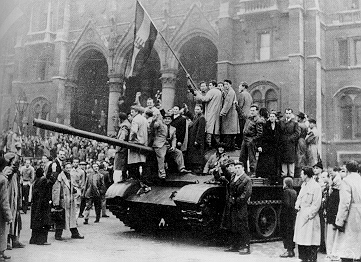
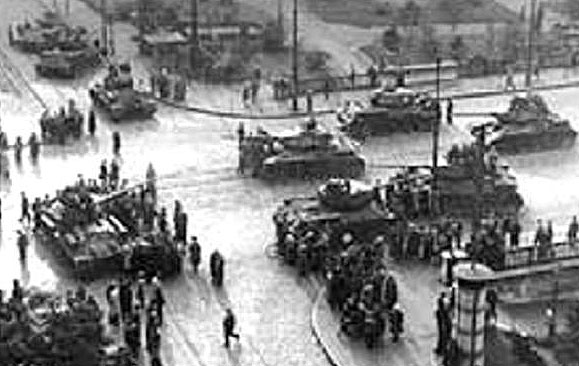
Two hundred thousand Russian troops attacked an anti-Stalinist
uprising in Hungary and installed a new pro-Russian government.
Although civilians had set up barricades along all the major
roads leading to Budapest, the Soviet air force bombed the
capital and troops poured into the city in a massive dawn
offensive. Soldiers and Hungarian National Guard troops participated
in the resistance; only Communist Party functionaries and
security police fought along with the Russians. The help promised
from the U.S. to protect and aid the anti-Stalinists never
came.
Hungarian
'freedom fighters' temporarily forced
back Soviet tanks and troops
Soviet
tanks in Budapest.
November
4, 1984
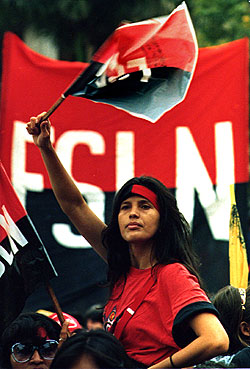
The
first free elections in Nicaraguan history were held. Nicaragua's
ruling Sandinista Front claimed a decisive victory in the
country's first elections since the revolution five years
previous, defeating six other parties.
read
more
November
4, 1995
Israeli
Prime Minister Yitzhak Rabin was fatally shot minutes after
speaking at a peace rally held in Tel Aviv's Kings Square
in Israel.
read
more
The
rally in Kings of Israel Square
November
5, 1872
Suffragist
Susan B. Anthony was fined $100 for attempting to vote in
a presidential election.
The
Trial of Susan B. Anthony for Illegal Voting
November
5, 1920
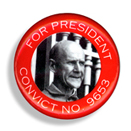
Eugene
V. Debs received nearly one million votes as the Socialist
Party’s presidential candidate while in prison (convict
#9653), serving a ten-year sentence for opposing World War
I.
November
5, 1949
The
Peace Pledge Union in Great Britain set up the Nonviolence Commission,
leading to direct action against nuclear weapons.
November
5, 1982
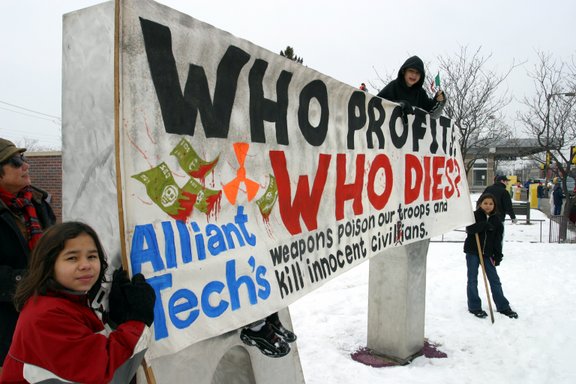
36
were arrested in a demonstration at Honeywell, Minnesota's largest
defense contractor. The "Honeywell Project," a local
campaign against the arms maker, dogged the company for over
three decades, at times with success.
Protests
at Alliant continue today.
It continues today, targeting Alliant Technologies, the arms-making
branch of Honeywell that was spun off in the 1990s. Alliant
is the manufacturer for the Pentagon of artillery shells made
with depleted uranium (DU or U-238, a by-product of uranium
enrichment) which have been used extensively in Iraq and Kosovo.
The Defense Department denies any health effects from use
of DU, though in army manuals warns soldiers of its toxicity,
and contests accusations of its role in Gulf War Syndrome.
an
interview with one of the organizers
November
5, 1987
Govan
Mbeki
Govan
Mbeki, an early leader of the African National Congress, was
released from Robben Island prison after serving twenty-four
years (for treason) alongside Nelson Mandela, Walter Sisulu
and many others who fought apartheid. His son, Thabo Mkeki
was elected to succeed Mandela, the first President elected
following the end of apartheid.
read
more about Govan Mbeki
November
6, 1913
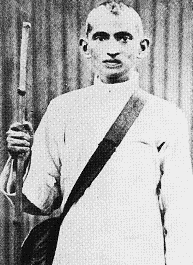
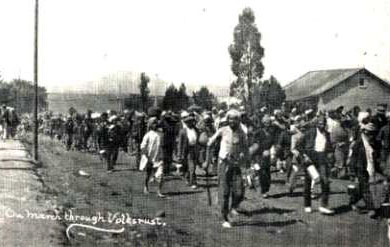
Mohandas
K. Gandhi led 2,500 Indian miners, women and others from South
Africa’s Natal province across the border with Transvaal
in the Great March.
This was a violation of the pass laws restricting the movement
of all non-whites in the country. Originally granted the rights
of British subjects, Indians’ rights were steadily eroded
beginning in the 1890s with the denial of the right to own property.
Shortly before the March, a court in Capetown invalidated all
Muslim and Hindu marriages.
Gandhi and many others were arrested and jailed when he refused
to pay a fine.
Mohandas
Gandhi, 1915
read
about the early resistance in South Africa
The
Great March to Transvaal
November
6, 1962
The
17th session of the U.N. General Assembly passed Resolution
1761 condemning apartheid in South Africa and called on all
member states to terminate diplomatic, economic and military
relations with the country.
The racial policies of the country were declared a threat
to international peace and security.
Apartheid was the racially separatist regime under which black,
and so-called colored South Africans to a somewhat lesser
extent, were without political, civil or economic rights.
All political power and wealth were held by the white population,
approximately 15% of the country. "Apartheid" is
the Afrikaans word for "apartness." (Afrikaans is
the language of the Boers, or [white] Afrikaners.)
The
day-to-day reality of apartheid:
a
chonology of the U.N. and apartheid
November
6, 1986
Although
an American plane with supplies for the Nicaraguan Contra insurgents
had been shot down the previous month, and a Lebanese newspaper
reported that the U.S. government had arranged for the sale
of weapons to Iran, President Ronald Ronald Reagan denied involvement
(“... a story that came out of the Middle East, and that
to us has no foundation....”) in what came to be known
as the Iran-Contra scandal.
November
7, 1837
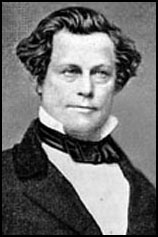
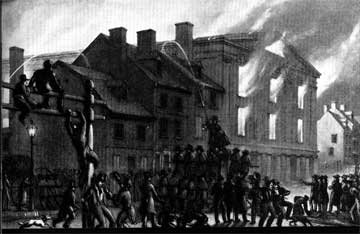
Abolitionist
and editor Elijah P. Lovejoy, 34, was murdered by a pro-slavery
mob in Alton, Illinois, as he defended his printing press.
Elijah
P. Lovejoy
He had lost three other presses to mob attacks, but refused
to surrender this one, which had been contributed by the Ohio
Anti-Slavery Society. For this he was shot five times in the
fatal attack. Lovejoy had moved 20 miles to Alton from St.
Louis where, after denouncing the lynching and burning of
a black man, a mob tore down his office.
read
more
Warehouse
with Lovejoy's press set ablaze by mob
"We
must stand by the Constitution and laws, or all is gone."
Elijah
Lovejoy, The Observer
November
7, 1916
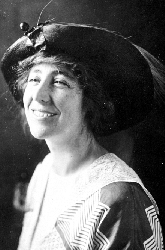
Jeannette
Rankin, a Republican from Missoula, Montana, became the first
woman elected to the U.S. Congress. American women nationwide
would not be able even to vote for another four years.
read
more
November
8, 1892
Thirty thousand black and white workers factory and dock staged
a general strike in New Orleans, demanding union recognition,
closed shops (where all co-workers join the union), and hour
and wage gains. They were joined by non-industrial laborers,
such as musicians, clothing workers, clerks, utility workers,
streetcar drivers, and printers.
November
8, 1933
President Franklin D. Roosevelt created the Civil Works Administration,
designed to create jobs for more than 4 million unemployed.
November
9, 1935
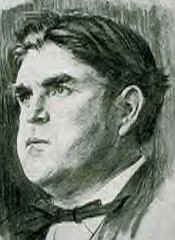
United
Mine Workers president John L. Lewis and other other labor
leaders formed the Congress of Industrial Organizations (CIO).
They had split with the existing labor union umbrella organization,
the American Federation of Labor (AFL) which was not interested
in organizing unskilled workers, such as those in the steel
and auto industries.
read
more
John
L. Lewis
November
9-10, 1938
Nazis looted and burned synagogues and Jewish-owned stores
and homes, and beat and murdered Jewish men, women, and children
across Germany and Austria. Known as Kristallnacht,
it was a night of organized violence against Jews marking
the beginning of the Holocaust with the killing of 91 and
the deportation of 30,000 to concentration camps. The German
word translates to "the Night of Broken Glass,"
so called because of the vast number of broken windows in
Jewish shops. 5 million marks worth ($1,250,000).
read
more
November
9, 1969
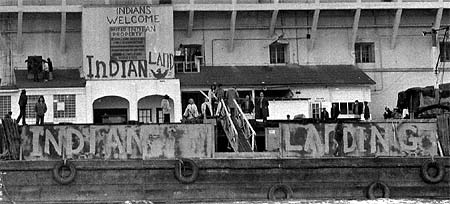
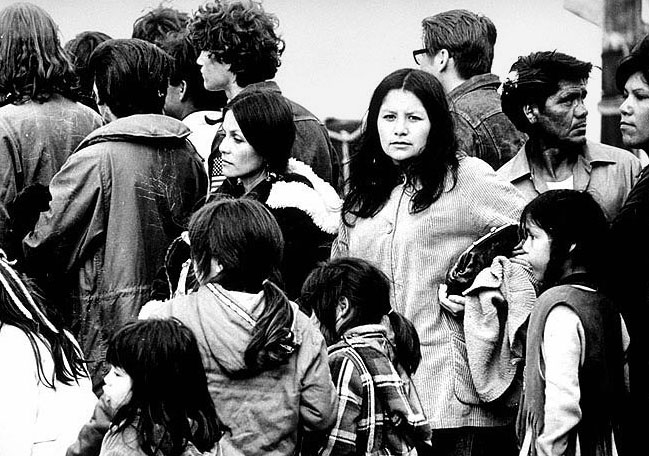
Seventy-eight
Indians from 20 tribes seized Alcatraz Island in San Francisco
Bay, offering to buy the island from the federal government
for $24 worth of beads (the alleged price paid to the Canarsee
Delaware Indians for Manhattan Island (it was actually 60
Dutch guilders)). They were reclaiming it as Indian land and
demanding fairness and respect for Indian peoples. The occupation
lasted for more than a year. "We hold The Rock,"
said Richard Oakes, a Mohawk from New York.
a new entrance to Alcatraz
Photo/Michelle
Vignes
read
more
Indian people and their supporters wait for the ferry. Photo/Ilka
Hartmann
LaNada
Boyer (formerly Means) inside one of the Alcatraz guard barracks
where occupiers lived from 1969-71. Much of the graffiti from
30 years ago remains throughout the island today.
Photo
by Linda Sue Scott.
November
9, 1984
U.S.
peace activists sailed a shrimp boat into the Port of Corinto
to confront U.S. warships threatening Nicaragua. The U.S. had
mined the harbor in violation of international law, and had
invaded Nicaragua through this port in 1896 and 1910.
November
9, 1989
For
the first time since World War II free travel between East
and West Germany was allowed. The Berlin Wall, built to stop
the exodus from the Communist-controlled East in 1961, opened
in response to nonviolent action.
November
9, 2002
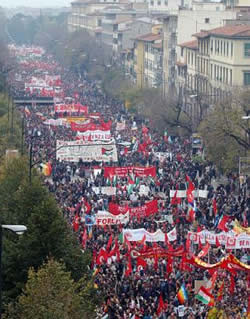
Florence,
Italy 11.9.02
Somewhere
between 450,000 and a million European peacefully protested
the threatened U.S. invasion of Iraq in Florence, Italy.
read
more
Many
joined those attending the first European Social Forum on
globalization.
Anti-globalization
activists look at a US flag, whose stars have been replaced
with logos of multinational companies, displayed at the entrance
of the old Leopolda Station in Florence, Italy.
November
10, 1924
Society
for Human Rights, the first gay rights organization in the
U.S., was founded in Chicago by Henry Gerber, an immigrant
inspired by Germany’s Scientific Humanitarian Committee,
formed to oppose the oppression of men and women considered
"sexual intermediates."
read
more
Henry
Gerber-one of the founders.
November
11, 1942
Congress approved lowering the draft age to 18 and raising
the upper limit to 37 within a year after declaring war on
Japan, Germany and Italy. In September 1940, Congress, by
wide margins in both houses, had passed the Burke-Wadsworth
Act, the first peacetime draft imposed in the history of the
United States.
read
about the good war and those who refused to fight it
November
11, 1972
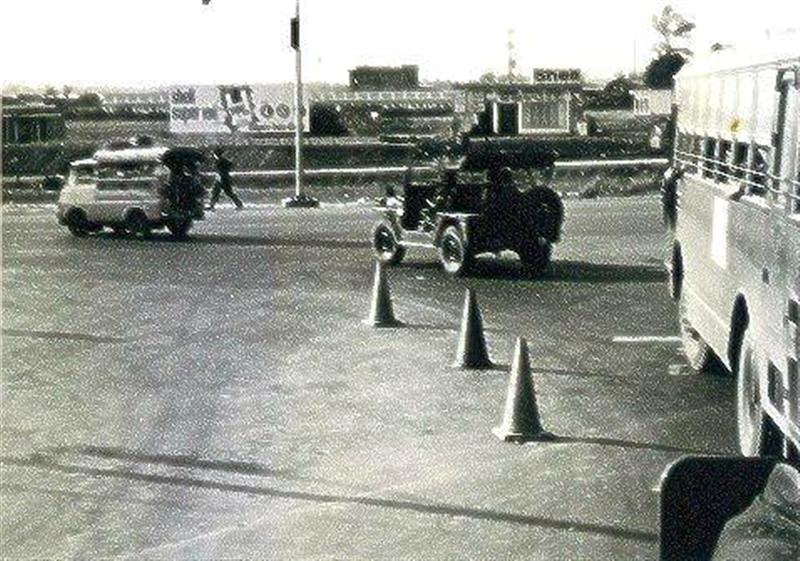
The
U.S. Army turned over its massive military base at Long Binh
to the South Vietnamese army, symbolizing the end of direct
U.S. military involvement in the Vietnam War. The last American
forces did not leave until 1974.
U.S.
military leaving the Long Binh base
November
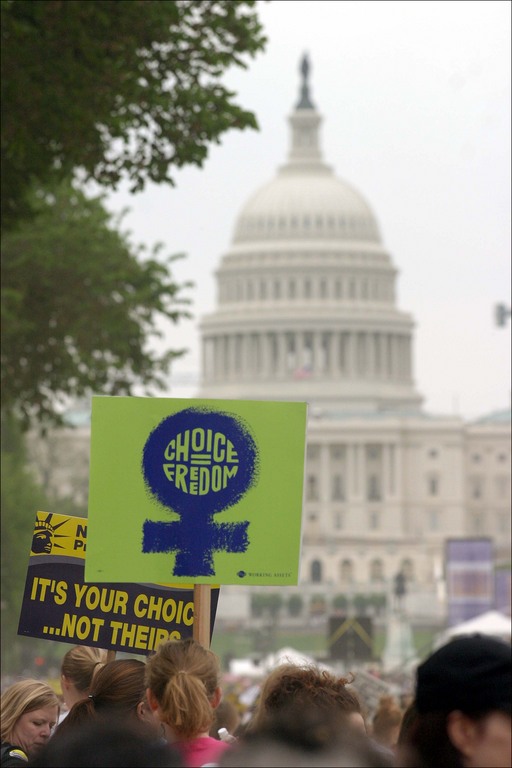
11, 1989
250,000
marched for the right to reproductive choice, including abortion,
in Washington, D.C.
National
Abortion Rights Action League Pro-Choice Ameica
November
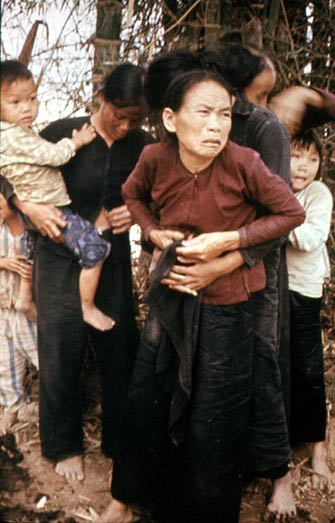
12, 1969
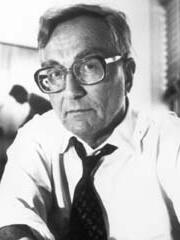
Seymour
Hersh, an independent investigative journalist, in a cable filed
through Dispatch News Service and picked up by more than 30
newspapers, revealed the extent of the U.S. Army's charges against
1st Lt. William L. Calley at My Lai, a Vietnamese village.
My
Lai
Hersh
wrote: "The Army says he [Calley] deliberately murdered
at least 109 Vietnamese civilians during a search-and-destroy
mission in March 1968, in a Viet Cong stronghold known as
'Pinkville.'"
The same Seymour Hersh first wrote about abuses of Iraqis
held in Abu Ghraib prison by Americans in 2004.
Seymour
Hersh has been instrumental in exposing abuses and torture
at Abu Ghraib prison in Iraq.
read
an interview
Seymour
Hersh
November
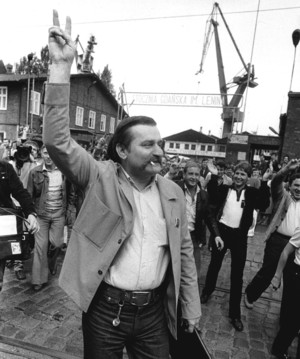
12, 1982
The
Polish Government freed the leader of the outlawed Solidarity
union movement, Lech Walesa, after 11 months of internment.
His release came only two days after riot police used tear
gas, water cannon and phosphorous rockets to disperse big
pro-Solidarity demonstrations in Warsaw and other cities.
read
more
Lech
Walesa
November
13, 1933
The
first recorded "sit-down" strike in the U.S. was
staged by workers at the Hormel Packing Company in Austin,
Minnesota. The tactic worked: Hormel agreed to submit wage
demands to binding arbitration.
The
success of this strike reinvigorated the labor movement, which
had been in decline through the 1920s.
Hormel
strikers
November
13, 1956
U.S.
Supreme Court ruled that segregation unconstitutional in public
transportation. The case, Browder v. Gayle, was brought by
several women, including Aurelia Browder, who had refused
to surrender their bus seats to whites (months before Rosa
Parks had done so).
Aurelia
Browder
The
four plaintiffs had been arrested for violating Alabama law
which required segregation on public buses. They challenged
the law and the Court agreed, finding the law under which
they were arrested violated the due process and equal protection
clauses of the Fourteenth Amendment.
read
more
A
roadside monument was dedicated in 2004 to the four plantiffs
in the Browder v. Gayle case.
November
13, 1960
Over 1000 Quakers surrounded the Pentagon for a silent vigil
to commemorate the 300th anniversary of the first Quaker Peace
Testimony issued to King Charles II in 1660.
read
more
From
the 1660 Peace Testimony: "We
utterly deny all outward wars and strife and fightings with
outward weapons, for any end or under any pretence whatsoever.
And this is our testimony to the whole world...."
November
13, 1974
Karen
Silkwood, a technician and union activist(Oil, Chemical, and
Atomic Workers' Union) at the Kerr-McGee Cimarron plutonium
fuels production plant near Crescent, Oklahoma, was killed
in a one-car crash.
Read
more about her story:
November
13, 1982
The
Vietnam War Memorial was dedicated in Washington, D.C. Carved
into the black granite are the 58,195 names of those Americans
who died in Vietnam. The designer, Maya Ying Lin, a 21 year-old
architecture student at Yale University. She was the winner
of the competition that drew 1,421 design entries: "...this
memorial is for those who have died, and for us to remember
them." Eventually, the Memorial included three elements,
the Wall of names, the Three Servicemen Statue and Flagpole,
and the Vietnam Women's Memorial.
Maya
Ying Lin
The
Wall of Names, the Three Servicemen Statue and Flagpole, and
the Vietnam Women's Memorial
Read
more about the memorial and the controversy around it:
November
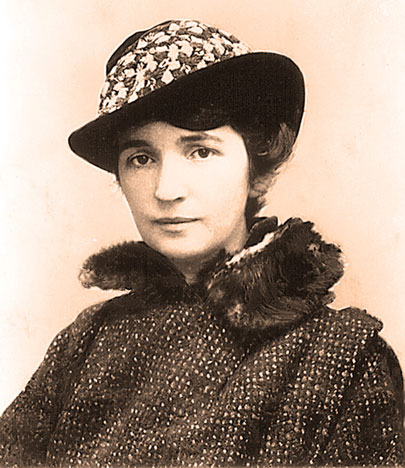
14, 1916
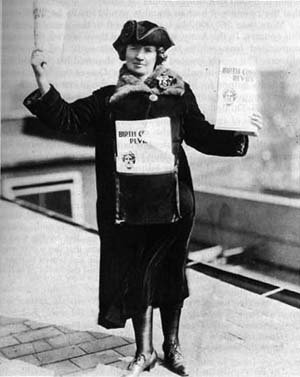
Margaret
Sanger was arrested for disseminating birth control information
at her Brownsville Clinic in Brooklyn; she was arrested again
2 days later for the same reason and the police shut it down
within 10 days.
read
more
Margaret
Sanger
November
15, 1940
The first 75,000 men were called to Armed Forces duty under
peacetime conscription.
November
15, 1943
Heinrich
Himmler, Adolf Hitler’s head of the SS (Schutzstaffel),
Gestapo, the Waffen SS and the Death’s Head units that
ran the concentration camps, made public an order that Gypsies
and those of mixed Gypsy blood were to be put on "the same
level as Jews and placed in concentration camps."
Himmler
was determined to prosecute Nazi racial policies, which dictated
the elimination from Germany and German-controlled territories
of all races deemed "inferior," as well as "asocial"
types, such as hardcore criminals. Gypsies fell into both
categories according to the thinking of Nazi ideologues and
had been executed in droves both in Poland and the Soviet
Union. The order of November 15 was merely a more comprehensive
program, as it included the deportation to Auschwitz of Gypsies
already in labor camps.
Gypsy
prisoners arriving at a Concentration Camp
Gypsies
in the Holocaust
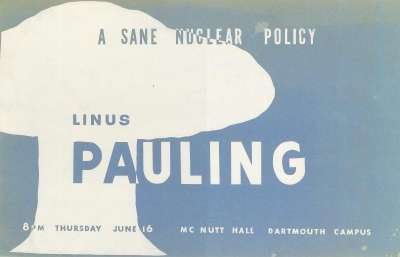
November 15, 1957
U.S. Committee for a Sane Nuclear Policy (SANE) was founded.
Thirty years later on November 20, SANE merged with the Nuclear
Freeze organization (dedicated to freezing all nuclear weapons
testing worldwide) at a joint convention in Cleveland to form
SANE/FREEZE, now known as Peace Action, the largest U.S. peace
organization.
read
more
Sane Nuclear Policy poster, 1960
November
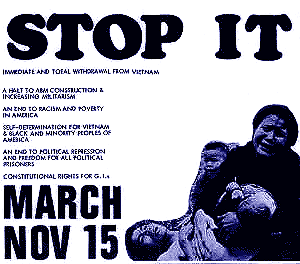
15, 1969
Following
a symbolic three-day "March Against Death," the second
national "moratorium" against the Vietnam War opened
with massive and peaceful demonstrations in San Francisco and
Washington, D.C.
Organized by the New Mobilization Committee to End the War in
Vietnam ("New Mobe"), an estimated 500,000 demonstrators
participated as part of the largest such gathering to date.
It began with a march down Pennsylvania Avenue in front of the
White House (while President Nixon watched the Purdue-Ohio State
football game on TV) to the Washington Monument, where a mass
rally with speeches was held. Pete Seeger, Arlo Guthrie, Peter,
Paul, and Mary, and four different touring casts of the musical
"Hair" entertained the demonstrators. The rally concluded
with nearly 40 hours of continuous reading of known U.S. deaths
(to that date) in Vietnam War.
November
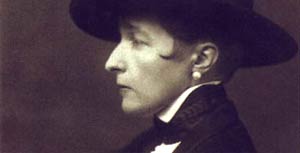
16, 1928
An obscenity trial began for Radclyffe Hall's novel, "Well
of Loneliness." Great Britain banned it for its treatment
of lesbianism. A U.S. court in 1929 ruled similarly, for its
sympathetic portrait of homosexuality, and because it "pleads
for tolerance on the part of society."
read
more
Radclyffe
Hall
November
16, 1980
Hundreds
were arrested at the Women's Pentagon Action protest of
patriarchy and its war-making.
read
more
November
16, 1989
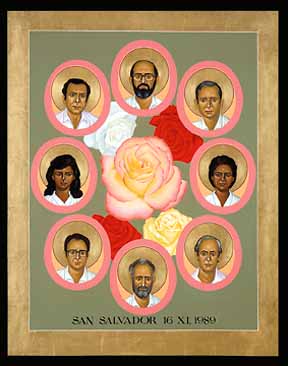
Six
Jesuit priests, their housekeeper and her daughter were brutally
murdered by U.S.-trained and -supported death squads in El Salvador.
A 1995 a United Nations’ The Commission on the Truth
for El Salvador linked the slayings to 19 members of the armed
forces who were graduates of the School of the Americas (SOA,
now called Western Hemisphere Institute for Security Cooperation),
a facility run by the U.S. Army at Fort Benning, Georgia.
The
Truth Commission’s report:
Over
its 59 years, the SOA has trained over 60,000 Latin American
soldiers in counterinsurgency techniques, sniper training, commando
and psychological warfare, military intelligence and interrogation
tactics. These graduates have consistently used their skills
to wage a war against their own people.
Among
those targeted by SOA graduates are educators, union organizers,
religious workers, student leaders, and others who work for
the rights of the poor.
read
more
more
on the School of the Americas
November 17, 1973
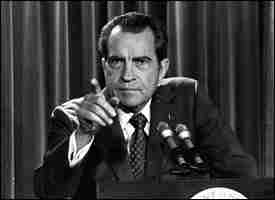
President Nixon told an Associated Press managing editors
meeting at Disney World in Orlando, Florida, that "people
have got to know whether or not their president is a crook.
Well,
I'm not a crook."
read
more
November
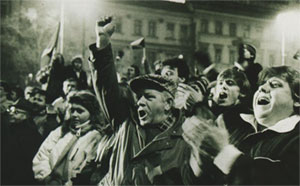
17, 1989
Riot
police in Prague, the capital of Czechoslovakia, arrested
hundreds of people taking part in a protest march. More than
15,000 people, mostly students, took part in the demonstration
demanding democratic rights, the biggest show of public dissent
for two decades.[see Nov.18, 1989 below]
Prague,
November 1989
November
18, 1910
Hundreds of suffragists marched on the House of Commons in
London, with reinforcements arriving to replace the "fallen"
and arrested. Protesting government inaction on the Conciliation
Bill, which would have enfranchised about a million women,
they are brutally forced back by Bobbies, leading to a public
outcry.
read
more
November
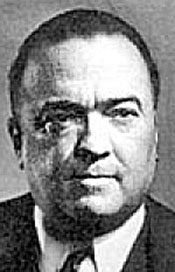
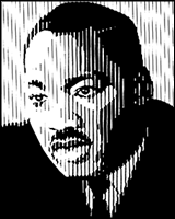
18, 1964
FBI
director J. Edgar Hoover characterized Martin Luther King,
Jr., as "the most notorious liar in the country."
King replied that Hoover "has apparently faltered under
the awesome burden, complexities, and responsibilities of
his office."
November
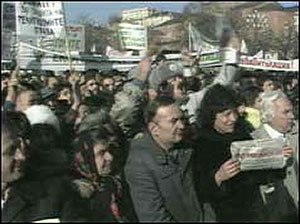
18, 1989
More
than 50,000 people took to the streets of Sofia, the capital
of Bulgaria, demanding political reform. In the biggest demonstration
in the country's post-war history, protesters held up banners
and chanted:
"We
want democracy now."
read
more
November
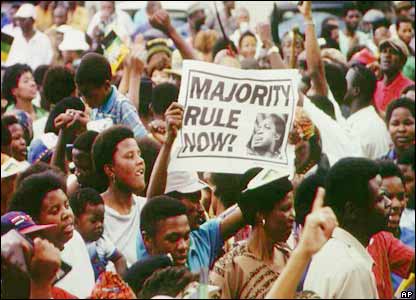
18, 1993
South
Africa's ruling National Party and leaders of 20 other parties
representing blacks and whites approved a new national constitution
that provided fundamental rights to blacks and other non-whites,
ending the apartheid system.
South
Africa held its first democratic multi-racial election on
April 26, 1994.
From
the preamble: “WHEREAS there is a need to create a
new order in which all South Africans will be entitled to
a common South African citizenship in a sovereign and democratic
constitutional state in which there is equality between
men and women and people of all races so that all citizens
shall be able to enjoy and exercise their fundamental rights
and freedoms....”
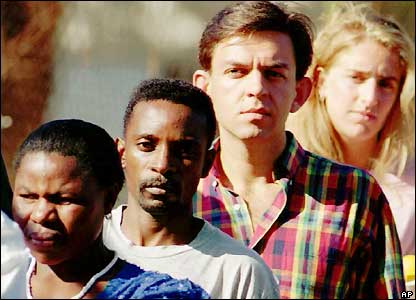
South
African citizens in line to vote.
November
19, 1969
In
an effort to undercut growing opposition to the Vietnam War,
Congress passed random selection of draftees through a lottery
based on one’s birthday, and permitted first calling of
19-year-olds and those with expired college deferments.
November
19, 1977
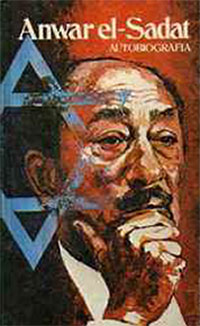
In
an unprecedented move for an Arab leader, Egyptian President
Anwar el-Sadat traveled to Jerusalem to seek a permanent peace
settlement with Egypt's neighbor, Israel, after decades of conflict.
This action was extremely unpopular in the Arab World and especially
among Muslim fundamentalists.
Sadat
on November 9:
“Israel would be astonished when they hear me say this.
But I say it. I am ready to go even to their home ... to the
Knesset and discuss peace with them if need be.”
Israeli Prime Minister Menachem Begin on November 11:
“Let us say to one another, and let it be a silent oath
by the peoples of Egypt and Israel: no more wars, no more
bloodshed and no more threats.”
Together in Jerusalem:
Sadat: “I wish to tell you today and I proclaim to the
whole world: We accept to live with you in a lasting and just
peace.”
Begin: “Everything must be negotiated and can be negotiated.
We Jews appreciate courage, and we will know how to appreciate
our visitor's courage.”
Sadat’s
speech to the Israeli Knesset (parliament):
November
20, 1816
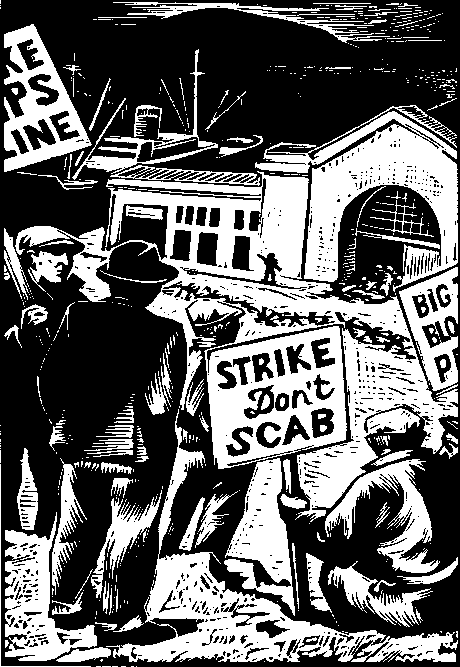
The
term "scab" was first used in print by the Albany
(N.Y.) Typographical Society.
What
is a Scab?
read The Scab by Jack London
November
20, 1945
The
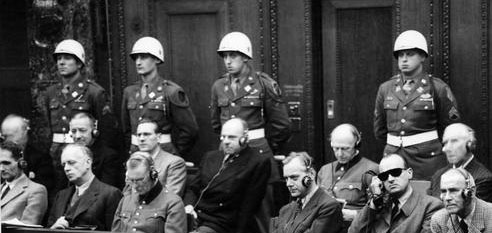
International War Crimes Tribunal began in Nuremberg, Germany,
and continued until October 1, 1946, establishing that military
and political subordinates are responsible for their own actions
even if ordered by their superiors.
Twenty-four
high-ranking Nazis were on trial for atrocities committed
during World War II, ranging from crimes against peace, to
crimes of war, to crimes against humanity. The Nuremberg Trials
were conducted by judges from the United States, the Soviet
Union, France, and Great Britain.
The
Nuremberg defendants
read
more
November
20, 1959
The
United Nations proclaimed "The Declaration of the Rights
of the Child," because “the child, by reason of
his physical and mental immaturity, needs special safeguards
and care, including appropriate legal protection, before as
well as after birth.”
Read
the text of the Declaration:
November
20, 1987
SANE
(The Committee for a Sane Nuclear Policy) and FREEZE (the
campaign to freeze all testing of nuclear weapons) merged
at their first combined convention in Cleveland, Ohio, becoming
the largest U.S. peace organization.
read
more
November
21, 1945
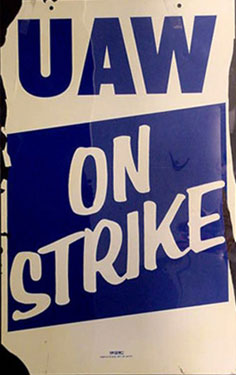
200,000
members of the United Auto Workers went on strike against
General Motors, the first major strike following World War
II.
The
UAW’s demand for a 30% wage increase was based on the
increase in the cost of living during the war (28% according
to the Department of Labor), the wartime freeze on wages,
and the cut in the average workweek with the disappearance
of overtime pay in manufacturing.
But
the UAW also considered profits and prices a subject for negotiation,
a position rejected by GM. The union did not merely say that
labor was entitled to enough wages to live on. It also said
that labor was entitled to share in the wealth produced by
industry.
“...
Unless we get a more realistic distribution of America’s
wealth, we won’t get enough to keep this machine going.”
–Walter
Reuther, UAW President
November
21, 1973
President
Richard Nixon's attorney, J. Fred Buzhardt, revealed the existence
of an 18 1/2-minute gap in one of the subpoenaed White House
tape recordings of Watergate conversations made by President
Richard Nixon in the days after the Watergate break-in.
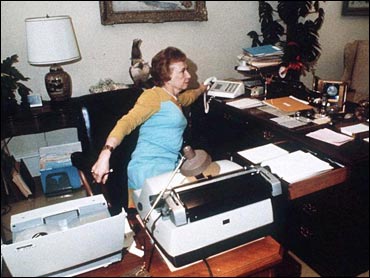
The erasure was blamed on an accident by Nixon's private secretary
Rose Mary Woods, but scientific analysis determined the erasures
to be deliberate. White House Chief of Staff Alexander Haig
later attributed the gap to "sinister forces."
read
more
Rose
Mary Woods, demonstrating how she might
have
created theWatergate tape gap
.
November 21, 1975
The
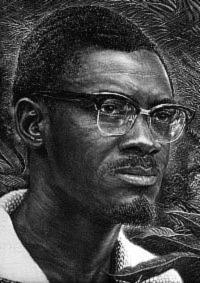
Church Committee, led by Sen. Frank Church (D-ID) issued a
report charging U.S. government officials were behind assassination
plots against two foreign leaders
– Fidel Castro (Cuba) and Patrice Lumumba (Congo), and
were heavily involved in at least three other plots: Rafael
Trujillo (Dominican Republic), (Vietnam), Rene Schneider (Chile).
Senator
Frank Church, left, chairman of the Senate Select Intelligence
Committee,
displays
a poison dart gun as co-chairman Senator John Tower (R-TX)
watches.
The
committee, a precursor to the Senate Intelligence Committee,
was established to look into misuse of and abuse by intelligence
agencies, particularly the CIA and FBI, some of which had
been revealed by the Watergate investigations.
Fidel
Castro / Patrice Lumumba / Rafael Trujillo / Ngo Dinh Diem
/ Rene Schneider
read
more
November
21, 1981
More than 350,000 demonstrated in Amsterdam against U.S. nuclear-armed
cruise missiles on European soil.
November
21, 1985
A
full-scale summit conference, the first of five between the
Pres. Ronald Reagan of the U.S. and General Secretary Mikhail
Gorbachev of the Soviet Union concluded in optimism over beginning
a more productive and cooperative relationship between the two
countries, each of which had thousands of nuclear warheads targeted
at the other. The U.S. had proposed building a space-based anti-ballistic
missile system, commonly known as “Star Wars,” which
the Soviets strongly opposed as an escalation of the nuclear
arms race.
In an unofficial meeting the previous evening, President Reagan
had noted that he and Gorbachev were meeting for the first time
at this level. They had little practice, since they had never
done it before. Nevertheless, having read the history of previous
summit meetings, he had concluded that those earlier leaders
had not accomplished very much. Therefore, he suggested that
he and Gorbachev say, "To hell with the past, we'll do
it our way and get something done.” Gorbachev concurred.
November
21, 1986
National Security Council member Oliver North and his secretary,
Fawn Hall, began shredding documents that would have exposed
their participation in a range of illegal activities regarding
the sale of arms to Iran in an attempt to free hostages, and
the diversion of the proceeds to an insurgent Nicaraguan group
known as the contras.
read
more
Fawn
Hall
Oliver
North
November
21, 1995
China
officially charged well-known human rights activist and political
dissident Wei Jingsheng with trying to “overthrow the
government.” Wei had not been seen for a year and a half
after disappearing into police custody after meeting with a
U.S. assistant secretary of state for human rights and humanitarian
affairs.
"If
the people allow the power holders, in the peoples' name,
to violate and ignore the rights of some of the people then,
at the same time, they are giving the power holders the power
to violate the rights of all the people.”
“Most people wait until others are standing to make
their move, very few are willing to stand up first or to stand
alone. That's why my friends call me a fool! But I don't have
any regrets." –
Wei Jingsheng
Wei
Jingsheng
He
had been imprisoned previously for his involvement with the
Democracy Wall movement, including years in solitary confinement.
He had also spoken out on behalf of the Tibetans.
Human
rights in China
November
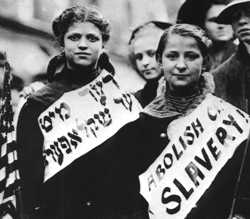
22, 1909
In New York City, the International Ladies Garment Workers
Union went on strike against sweatshop conditions in what
became known as the "Uprising of the 20,000" and
the "Girl's Revolt." The strikers won the support
of other workers and the women's suffrage movement for their
persistence and unity in the face of police brutality and
biased courts. A judge told arrested pickets: "You are
on strike against God." This was the first mass strike
by women in the U.S.
read
more
November
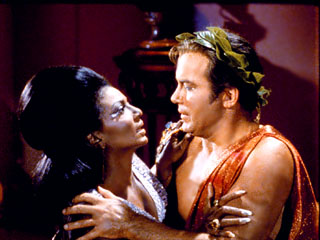
22, 1968
What
is believed to be the first interracial kiss on broadcast
television occurred in an episode of Star Trek between William
Shatner and Nichelle Nichols.
November 22, 1998
7,000 marched on the U.S. Army’s School of the Americas
(SOA) at Fort Benning, outside Columbus, Georgia. They were
protesting the school’s training of Latin American soldiers
and other security personnel who return to their countries
and are involved in violence and oppression of their populations.
2,319
people were arrested for trespassing.
Protests
at the School of the Americas, organized by SOA Watch,
occur every November.
Visit
School of the Americas watch.
2002
protest at SOA
November
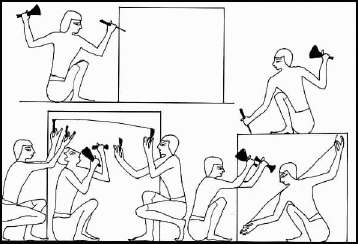
23, 1170 BCE
The
first recorded strike took place in Egypt when necropolis
workers who had not been paid for their work in more than
two months sat down and refused to work until they were paid
and able to eat.
November
23, 1981
President
Ronald Reagan signed off on a top secret document, National
Security Decision Directive 17 (NSDD-17), which gave the Central
Intelligence Agency a budget of $19 million to recruit and
support a 500-man force of Nicaraguan insurgents to conduct
covert actions against the leftist Sandinista elected government.
This marked the beginning of official U.S. support for the
so-called contras in their war against the Sandinistas.
November
24, 1859
British
naturalist Charles Darwin published ''On the Origin of Species,''
which explained his theory of evolution.
Behind
the Controversy: How Evolution Works
Charles
Darwin
November
24, 1869
Women
and men from 21 states met in Cleveland to organize the American
Women Suffrage Association led by Lucy Stone, Henry Blackwell,
Thomas Wentworth Higginson, and Julia Ward Howe. The group’s
approach to enfranchisement was through acquiring the right
to vote state-by-state.
November
24, 1947
The
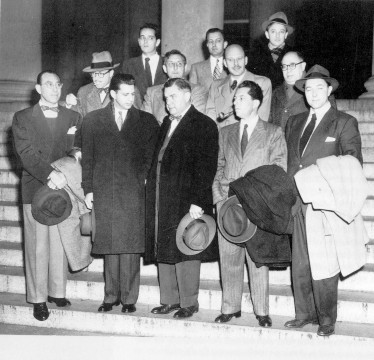
Hollywood 10
A
group of writers, producers and directors that became known
as the "Hollywood 10" were cited for contempt of
Congress when they refused to cooperate at hearings about
alleged Communist influence in the movie industry. Following
their appearance in front of House Un-American Activities
Committee (HUAC) under Rep. John Parnell Thomas (R-NJ), the
House of Representatives voted 346-17 for the citations. All
were convicted and sentenced to 6-12 months in prison. The
charges were upheld by the U.S. Supreme Court.
Invoking
their 5th Amendment right not to be witnesses against themselves
and their 1st Amendment right to freely associate with whom
they choose, the Hollywood 10 refused to tell the committee
whether they were or had been Communists.
Others cooperated: the mother of actor and dancer Ginger Rogers
testified her daughter had been asked to say in a film, "Share
and share alike, that's democracy," a line from a script
written by the blacklisted Dalton Trumbo. Rogers said this
was "definitely Communist propaganda.
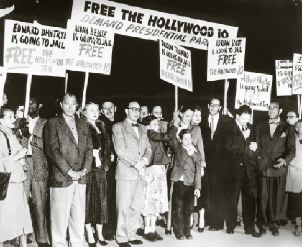
Free
The Hollywood 10 Demo
read
more
November
24, 1970
14
American students met with Vietnamese in Hanoi to plan "Peoples'
Peace Treaty,"
a treaty between the people of The United States of America,
South Vietnam and North Vietnam which begins: "Be it
known that the American people and the Vietnamese people are
not enemies." The treaty was later endorsed by millions.
read
the treaty
November
24, 1983
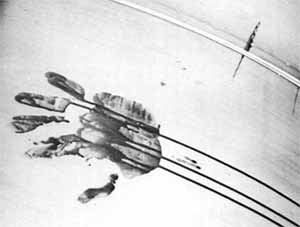
On
Thanksgiving Day seven Plowshares activists hammered and poured
blood on B-52 bombers converted to carry cruise missiles at
Griffiss Air Force Base near Syracuse, New York.
read
more
their statement
Bloody
handprint on missile.
November
24, 1987
The
United States and the Soviet Union agreed to scrap short-
and medium-range missiles in the first superpower treaty to
eliminate an entire class of nuclear weapons. The Intermediate
Nuclear Forces (INF treaty), signed by Reagan and Gorbachev,
was the first to actually reduce the number of nuclear weapons
held by the two sides.
November
24, 1993
Congress
voted to formally apologize to Hawaii
for
the 1893 overthrow of the government of
Queen
Lydia Liliuokalani.
read
the apology
and
a Hawaiian Declaration of Independence
Queen
Lydia Liliuokalani
November
25, 1947
Film
industry executives, meeting in New York, announced that the
ten directors, producers, and writers who refused to testify
before the House Un-American Activities Committee (HUAC) would
be fired or suspended, and not hired in the future, thus “blacklisted.”
read
more
November
25, 1986
The
Iran-Contra affair erupted in the U.S. three weeks after a
Lebanese magazine reported it when U.S. President Ronald Reagan
and Attorney General Edwin Meese revealed that profits from
secret arms sales to Iran had been diverted to American-supported
Nicaraguan contra insurgents in violation of U.S. laws.
What
was Iran-Contra?
Who's
who in Iran-Contra
November
25,
1988
2,000
marched in New York city to protest the sale of animal fur
for clothing.
Over
50 other cities held demonstrations.
November
26, 1968
U.N.
General Assembly passed a resolution against capital punishment
following an official report which said, “Examination
of the number of murders before and after the abolition of the
death penalty does not support the theory that capital punishment
has a unique deterrent effect.”
November
26, 1970
American Indian Movement (AIM) activists celebrated Thanksgiving
by occupying Plymouth Rock, Massachusetts.
This
yearly Thanksgiving Day action has become known as the National
Day of Mourning.
read
more
Day
of Mourning demo in downtown Plymouth
November
27, 1915
The
No-Conscription Fellowship (NCF) was founded by two English
pacifists, Clifford Allen and Fenner Brockway. They opposed
the Military Service Act which introduced conscription and mounted
a vigorous campaign against the punishment and imprisonment
of conscientious objectors.
early
Fellowship members
Fellowship
members at a recent protest
read
more
November
27, 1957
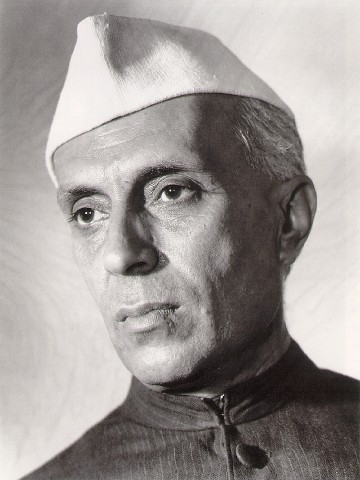
Jawaharlal
Nehru, who fought British colonial authority through acts
of passive resistance and became India's first Prime Minister,
made an impassioned speech appealing to the United States
and the USSR to end nuclear tests and begin disarmament, which,
he said, would "save humanity from the ultimate disaster."
read
his appeal
November
27, 1965
In
Washington D.C., 35,000 anti-war protesters circled the White
House then marched on to the Washington Monument for a rally.
Eight years later, the last U.S. troops left Vietnam.
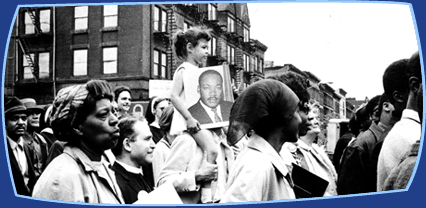
November
27, 1967
Poor
Peoples March, NYC
Martin
Luther King, Jr. announced the Southern Christian Leadership
Conference’s Poor People’s Campaign, a movement
to broadly address economic inequalities with nonviolent direct
action. "It must not be just black people," argued
King, "it must be all poor people. We must include American
Indians, Puerto Ricans, Mexicans, and even poor whites."
November
27, 1969
100 U.S. Army medics stationed at the 71st Evacuation Hospital
at Pleiku, Vietnam, held a Thanksgiving fast to protest the
Vietnam War in solidarity with the moratorium movement, the
domestic anti-war movement.
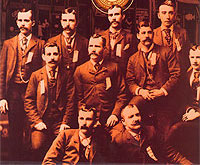
November
28, 1891
Early IBEW delegates
The International Brotherhood of Electrical Workers (IBEW)
was founded when 10 men met at Stolley’s Dance Hall
in St. Louis, Missouri. Their goal: the joining together of
electricians in a common organization to make a better life
for all.
read
more
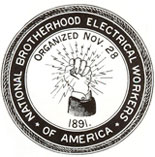
The original logo adopted at the First Convention.
November
28, 1905
Arthur
Griffith
The political party Sinn Fein (meaning “we ourselves”
in Gaelic) was founded in Dublin by Irish nationalist Arthur
Griffith. Its objective was to end British rule in Ireland
and seek national self-determination as a sovereign state.
read
about the origin of Sinn Fein
November
28, 1988
Activists in Woensdrecht, Netherlands, paint anti-military graffiti
on war planes due for delivery to Turkey.
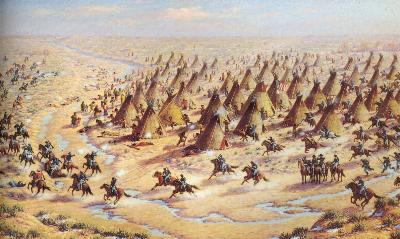
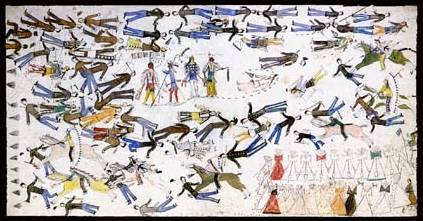
November 29, 1864
A U.S. Army cavalry regiment under Col. J. M. Chivington (a
Methodist pastor), acting on orders from Colorado's Governor,
John Evans, and ignoring a white surrender flag, attacked
sleeping Cheyenne and Arapaho Indians, killing nearly 500,
in what became known as the Sand Creek Massacre.
The Indians had been ordered away from Fort Lyon four days
before, with the promise that they would be safe. Virtually
all of the victims, mostly women and children, were tortured
and scalped; women's genitals were cut out and stuck on poles.
Nine of 900 cavalrymen were killed. A local newspaper called
this "a brilliant feat of arms," and stated the
soldiers had "covered themselves with glory." At
first, Chivington was widely praised for his "victory"
at the Battle of Sand Creek, and he and his troops were honored
with a parade in Denver. However, rumors of drunken soldiers
butchering unarmed women and children began to circulate,
and Congress ordered a formal investigation of the Sand Creek
Massacre. Chivington was eventually threatened with court
martial by the U.S. Army, but as he had already left his military
post, no criminal charges were ever filed against him.
read
more
two
different paintings of the Sand Creek Massacre
November
30, 1216
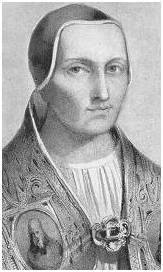
Pope
Innocent II
Pope Innocent II, in a papal bull, ordered that Jews, "whether
men or women, must in all Christian countries distinguish
themselves from the rest of the population in public places
by a special kind of clothing." The rule was interpreted
as requiring a badge on clothing as determined by each country.
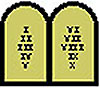
In England, for example, the tablets with the 10 commandments
were used.
read
more
November
30, 1967
Senator
Eugene McCarthy (D-Minnesota) announced that he would run
on an anti-war platform against President Lyndon Johnson for
the nomination
of
the Democratic Party.
read
more
McCarthy
on the campaign trail
November
30, 1993
The
Brady Handgun Violence Prevention Act became law. It provided
for a waiting period before the purchase of a handgun, and
for the establishment of a national instant criminal background
check system to be contacted by firearms dealers before the
transfer of any firearm.
The
law was named for James Brady, President Reagan’s press
secretary, who became a paraplegic due to a wound suffered
in the assassination attempt on Reagan, and thereafter was
a leading proponent of controlling the proliferation of handguns.
James
Brady watches President Clinton sign the bill
November
30, 1999
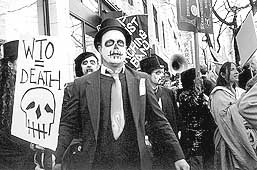
Tens of
thousands of activists, students, union members and environmentalists
demonstrating for global justice shut down the World Trade
Organization (WTO) summit in Seattle, Washington.
International
media coverage ignored both the blockade and the police riot
(and an enormous labor-sponsored rally and march), focusing
instead on minor property damage committed by a few dozen
self-described anarchists.
This
Week In History compiled by peacebuttons.info from various
sources
which are available upon request.
Submissions are always welcome. Please furnish sources. cb@peacebuttons.info
Reproduction
of this calendar for non-profit purposes
is permitted and encouraged. Please credit/link to www.peacebuttons.info









 Protests
at Alliant continue today.
Protests
at Alliant continue today.









 Florence,
Italy 11.9.02
Florence,
Italy 11.9.02







 Radclyffe
Hall
Radclyffe
Hall 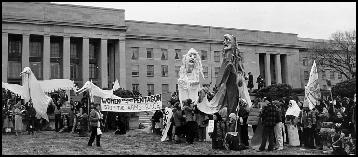







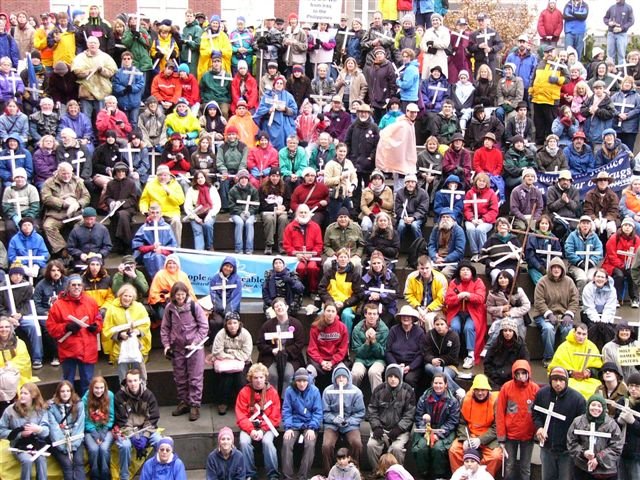

 Free
The Hollywood 10 Demo
Free
The Hollywood 10 Demo


 Poor
Peoples March, NYC
Poor
Peoples March, NYC
 Early IBEW delegates
 The original logo adopted at the First Convention.
 Pope
Innocent II
Pope
Innocent II