The
International Peace Bureau was launched in Berne, Switzerland,
“...to coordinate the activities of the various peace
societies and promote the concept of peaceful settlement of
international disputes.”
December
1, 1948
Following
the civil war in 1948, Costa Rican president Pepe Figueres
constitutionally abolished the army and the Constitution prohibits
presidential re-election. Money not spent on a military allows
for one of the highest literacy rates in the continent, ninety-four
percent.
read
about Costa Rica’s values and attitudes
December
1, 1955
Rosa
Parks, a black seamstress active in the local NAACP, was arrested
by police in Montgomery, Alabama, after refusing to give up
her seat on the bus to a white man. Mrs. Parks faced a fine
for breaking the segregation laws which said blacks had to
vacate their seats if there are white passengers left standing.
Mrs. Parks had not been the first to defy the Jim Crow law
but her arrest sparked the year-long Montgomery Bus Boycott,
organized by a young Baptist minister named Martin Luther
King, Jr. The Montgomery bus company couldn’t survive
without the revenue from its black passengers who, for the
next year, created car pools and other means to avoid using
the city busses. The boycott was successful and Mrs. Parks
became known as the "mother of the civil rights movement."
read
more about Rosa Parks
December
1, 1966
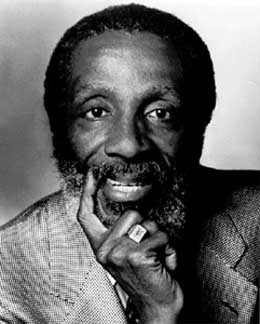
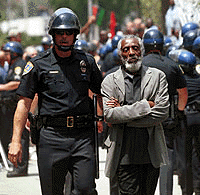
Comedian Dick Gregory was convicted in Olympia, Washington
for his participation in a Nisqually Native American fishing
rights protest.
read
more
December
2, 1914
Karl
Liebknecht was the only member of German Parliament to vote
against war with France and Britain.
read
more
Karl
Liebnecht
December
2, 1942
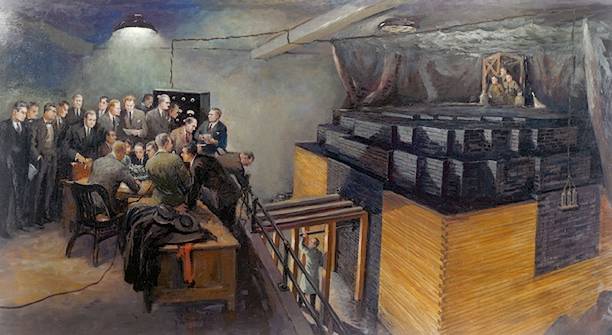
Enrico
Fermi, the Italian-born Nobel Prize-winning physicist, directed
and controlled the first self-sustaining fission reaction in
his laboratory beneath the bleachers of Stagg Field at the University
of Chicago.
The result of this experiment made the atomic bomb possible
and ushered in the nuclear age. Upon successful completion
of the experiment, a coded message was transmitted to President
Roosevelt: "The Italian navigator has landed in the new
world."
December
2, 1954
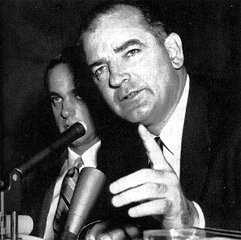
The
U.S. Senate voted 65 to 22 to censure Senator Joseph R. McCarthy
(R-Wisconsin) for "conduct that tends to bring the Senate
into dishonor and disrepute."
The condemnation, with all the Democrats and about half the
Republicans voting against him, and was related to McCarthy's
controversial, abusive and indiscriminate investigation of
suspected communists in the U.S. government, military, and
civilian society. The House of Representatives and many states
continued their own investigations.
read
more
December
2, 1961
Following
a year of severely strained relations between the United States
and Cuba, Cuban leader Fidel Castro openly declared that he
is a Marxist-Leninist.
Fidel
Castro
December
2, 1964
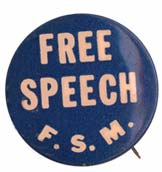
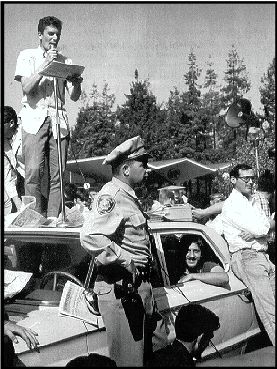
Thousands
in the Berkeley Free Speech Movement gathered on the steps
of Sproul Hall, the administration building at the University
of California campus to protest four students being disciplined
for distributing political literature. Joan Baez performed.
The next day, police arrested 773 who began a sit-in at Sproul
Hall. 10,000 more students then went on strike and shut down
the school.
The
Free Speech Movement had began in October, when three thousand
students surrounded a police car for 36 hours. Inside the
car was a civil rights worker who had been arrested for distributing
political literature on the UC-Berkeley campus.
What
was the Free Speech Movement?
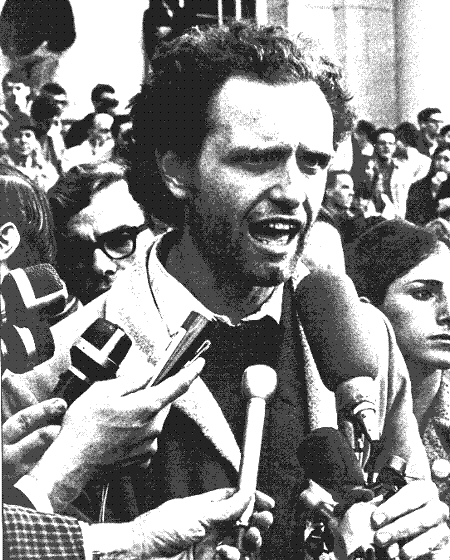
Jack
Weinberg
in
police car.
December
2, 1977
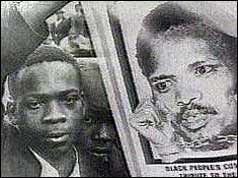
Biko's
funeral
A
demonstration erupted outside a South African court after
a magistrate ruled that security police were to be exonerated
in the death of black consciousness leader Steve Biko, who
died while in their custody.
His
funeral had been attended by more than 15,000 mourners, not
including the thousands who were turned away by the police.
Steve
Biko
read
about Steve Biko
December
2, 1980
Two
Maryknoll nuns, one Ursuline nun and a lay missionary were
raped, murdered, buried outside San Salvador, and unearthed
shortly thereafter. U.S.-trained and -supported Salvadoran
national guardsmen, widely known to act as death squads, were
suspected.
read
more
American Nuns Maura Clarke, Ita Ford and Dorothy Kazel - killed
in El Salvador in 1980.
The
Reagan administration, taking office seven weeks later, and
relying in part on the Salvadoran military to rid Central America
of communism, denied the National Guard’s involvement.
General Alexander Haig, the president’s secretary of state,
suggested the nuns provoked the incident, running a roadblock
in Marxist jeeps, and were shot trying to flee. The FBI and
CIA report this is a total fabrication and five national guardsmen
were later convicted of murder.
December
3, 1965
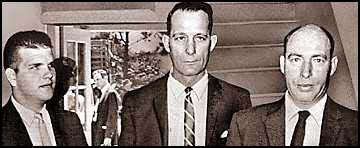
An
all-white jury in Alabama convicted three Ku Klux Klansmen
for the murder of white civil rights activist Viola Liuzzo.
Viola
Liuzzo
The mother of five from Detroit was shot and killed while
driving a young black activist, Leroy Moton, back to the town
of Selma following a protest march to the state capital in
Montgomery earlier in the year. It was later learned that
one of the Klansmen in the car, Gary Thomas Rowe, was an FBI
informant.
read
more
Klansmen
Collie Wilkins, Eugene Thomas and William Eaton at their trial
December
3, 1969
Protesters
destroyed files at eight New York draft boards in protest
of the
Vietnam
War.
December
3, 1984
In
the early morning hours, one of the worst industrial disasters
in history began when American-owned Union Carbide’s
pesticide plant located near the densely populated city of
Bhopal in central India leaked a highly toxic cloud of methyl
isocyanate into the air.
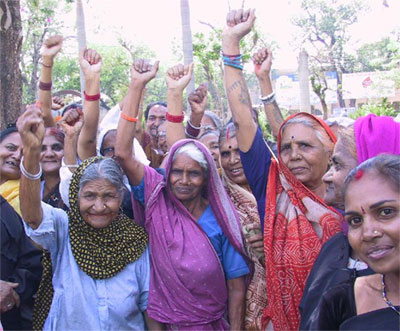
Bhopal
survivors still demanding justice 2004
Estimates of the fatalities vary widely, but of the approximately
one million people living in Bhopal at the time, 2,000 were
killed immediately, at least another 8,000 within a short
time, and hundreds of thousands were injured, many still suffering
today.
The U.S. blocked extradition of Union Carbide officials facing
criminal prosecution in India. Union Carbide has since been
purchased by Dow Chemical which continues to refuse responsibility
for the incident or its victims, and has yet to clean up the
site.
read
more
December
3, since 1992
The
International Day of Disabled Persons was declared by the
United Nations. “The annual observance of the International
Day of Disabled Persons ... aims to promote an understanding
of disability issues and mobilize support for the dignity,
rights and well-being of persons with disabilities ....”
2006
Theme: “E-Accessibility
December
3, 1997
An
international treaty banning land mines was signed by 122 countries.
It comprehensively prohibits the use, production, trade or stockpiling
of antipersonnel mines. Buried landmines kill about 15,000 people
every year worldwide. The dangerous and time-consuming process
of removal will take centuries at the current rate of landmine
clearance.
The
United States and approximately forty other countries have
yet to sign the treaty, and fifteen countries continue to
produce land mines. The Pentagon requested $1.3 billion for
research on and production of two new landmine systems—Spider
and Intelligent Munitions System—between fiscal years
2005 and 2011 but Congress has resisted funding the programs
under pressure from nearly 500 U.S.-based organizations opposing
the weapons.
Read
more about the treaty:
Recent
U.S. policy on land mines:
December
4, 1833
The
American Anti-Slavery Society was formed by Arthur Tappan
in Philadelphia. He and his brother Lewis were active abolitionists
throughout their lives, including providing legal defense
for the Africans who mutinied on the slave ship Amistad.
read
more
Arthur
Tappan
December
4, 1916
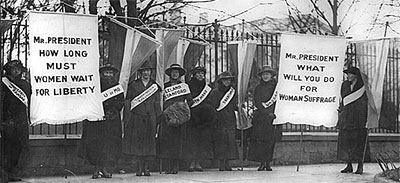
Five
members of a woman's suffragist group unrolled a banner from
the visitor's gallery during President Wilson's annual message
(state of the union) to Congress, asking, "Mr. President,
What will you do for woman suffrage?" There was no mention
of the issue in his speech.
December
4, 1967
National
draft card turn-in.
December
4, 1968
264 were arrested at a military induction center in New York
City during War Resisters League civil disobedience action.
December
4, 1969
President
Richard Nixon, Vice-President Spiro T. Agnew, and 40 U.S.
governors embarked on a fact-finding mission to discover the
causes of the generation gap. They viewed films of "simulated
acid trips" and listened to hours of "anti-establishment
rock music."
President
Richard Nixon
Vice-President Spiro T. Agnew
December
4, 1970
Cesar
Chavez was sentenced to 20 days in jail for refusing to call
off United Farm Workers’ consumer boycott of lettuce.
read
more
Lettuce
& Grape boycott poster
December
4, 1980
United Nations agreed to establish the University of Peace
and a short wave radio station, Radio Peace International,
in
Costa Rica.
Listen
to Radio for Peace International
December 5, 1955
Five
days after Rosa Parks refused to give up her
bus
seat to a white man, the African-American community of Montgomery,
Alabama, launched their boycott of the city's bus system.
The
Montgomery Improvement Association (MIA) was formed to coordinate
the boycott with Dr. Martin Luther King, Jr., elected as its
president.
Out
of Montgomery’s 50,000 black residents, 30,000-40,000
participated.
The
boycott lasted (54 weeks) until the buses were integrated.
read
more
December 5, 1955
The
American Federation of Labor, which had historically focused
on organizing craft unions, merged with the Congress of Industrial
Organizations, an organization of industrial unions, to form
the AFL-CIO with a membership of nearly 15 million. George
Meany was elected its first president.
read
more
December 5, 1957
New
York City became the first city to legislate against racial
or religious discrimination in housing (Fair Housing Practices
Law).
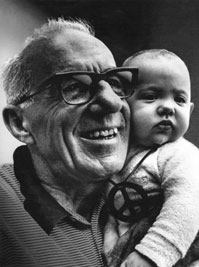
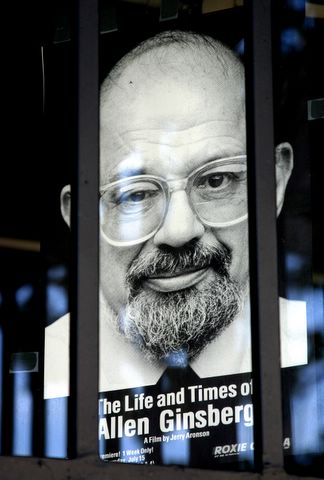
December 5, 1967
1,000
anti-war protesters tried to close a New York City military
induction center. 585 were arrested including poet Allen Ginsberg
and Dr. Benjamin Spock. Simultaneous demonstrations occurred
in Madison, Wisconsin, Manchester, New Hampshire, Cincinnati,
Ohio, and New Haven, Connecticut.
Dr.
Benjamin Spock
Allen Ginsberg
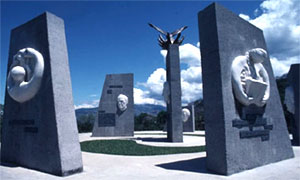
December
5, 1980
The United Nations adopted the charter for the University
for Peace, Costa Rica.
read
more
The
monument sculpted by Cuban artist Thelvia Marín in
1987, is the world's largest peace monument.
December 5, 2002
At
the 100th birthday celebration for Sen. Strom Thurmond (R-South
Carolina), Senate Republican leader Trent Lott (R-Mississippi)
praised Thurmond's Dixiecrat Party 1948 presidential campaign
(official slogan: “Segregation Forever!”).
President
George W. Bush with Sen. Lott and Sen. Thurmond
“I
want to say this about my state. When Strom Thurmond ran for
president, we voted for him. We're proud of him. And if the
rest of the country had followed our lead, we wouldn't have
had all these problems over all these years, either.”
The reaction to this sentiment led to Lott's resignation as
Senate majority leader.
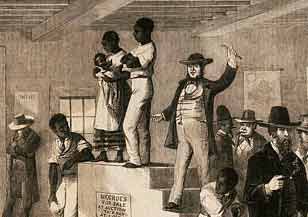
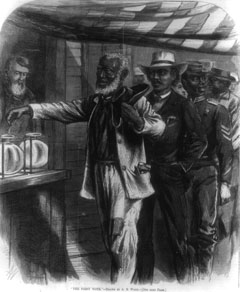
December 6, 1865
Georgia
provided the final vote needed for the 13th Amendment to become
part of the U.S. Constitution, abolishing slavery.
slave
auction
“Neither slavery nor involuntary servitude, except as
a punishment for crime whereof the party shall have been duly
convicted, shall exist within the United States, or any place
subject to their jurisdiction.”
read
more
first
vote
Two
days before, Mississippi’s legislature had voted to reject
ratification.
December 6, 1978
The
voters of Spain approved a new constitution in a popular referendum
by nearly 8-1. It proclaimed Spain to be a parliamentary monarchy
and guaranteed its citizens equality before the law and a
full range of individual liberties, including religious freedom.
While recognizing the autonomy of the regions, it stressed
the indivisibility of the Spanish state.
read
more
December
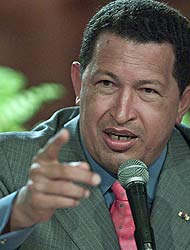
6, 1998
In
Venezuela, former Lt. Col. Hugo Chavez, who had staged a bloody
coup attempt against the government six years earlier, was
elected president. As a socialist reformer, Chavez’s
policies have given land to the landless and, using Venezuela’s
oil revenues, increased investment in housing and infrastructure.
read
more
December 7, 1964
A leader of the Berkeley Free Speech Movement, Mario Savio,
was arrested. One-third of the 27,000 students at the University
of California campus, along with faculty, were on strike protesting
to preserve their first amendment right to distribute political
literature and organize on campus. A faculty resolution passed
824-115, supporting the rapidly growing Free Speech Movement.
more
on Mario Savio
"There
is a time when the operation of the machine becomes so odious,
makes you so sick at heart, that you can't take part; and
you've got to put your bodies upon the gears and upon the
wheels, upon the levers, upon all the apparatus and you've
got to make it stop." - Mario Savio
December
8, 1886
The
American Federation of Labor was founded at a convention of
union leaders in Columbus, Ohio.
read
more
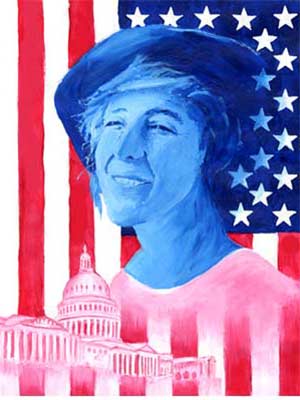
December
8, 1941
Jeanette
Rankin (R-Montana), the first woman elected to the U.S. Congress
in 1916, cast the only vote against U.S. entry into WWII.
She had also voted against the U.S. entering WWI.
read
more
December
8, 1953
U.S.
President Dwight Eisenhower addressed the United Nations General
Assembly, proposing the creation of a new U.N. atomic energy
agency which would receive contributions of uranium from the
United States, the USSR, and other countries "principally
concerned," and would put this material to peaceful use.
The
speech, known later as Atoms for Peace, included: “My
country wants to be constructive, not destructive. It wants
agreement, not wars, among nations. It wants itself to live
in freedom, and in the confidence that the people of every
other nation enjoy equally the right of choosing their own
way of life.”
December
8, 1987
U.S.
President Ronald Reagan and Soviet leader Mikhail Gorbachev
sign the first treaty to reduce the nuclear arsenals of the
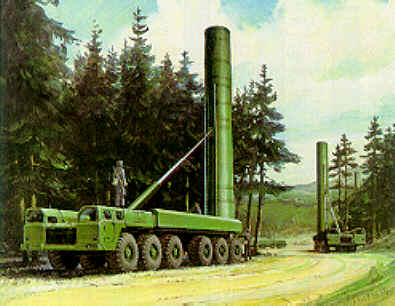
two superpowers. The Intermediate Nuclear Forces (INF) Treaty
eliminated and banned all ground-launched ballistic and cruise
missiles with a range of 300-3,400 miles (500-5,500 kilometers).
By May 1991, all intermediate-range and shorter-range missiles,
launchers, and related support had been eliminated.
December
8, 1988
Intermediate
Nuclear Force vehicle
On
the first anniversary of the INF (Intermediate Nuclear Force)
Treaty, twelve Dutch peace activists, calling themselves "INF
Ploughshares," cut through fences to enter the Woensdrecht
Air Force base in The Netherlands. They made their way to
cruise missile bunkers where they hammered on the missiles,
carrying out the first disarmament action in Holland.
read
more
December
9, 1949
U.S.
Representative John Parnell Thomas, former chairman of the
House Un-American Activities Committee (HUAC), was sentenced
to 6 to 18 months in federal prison for "padding"
Congressional payrolls and using the money himself.
John
Parnell Thomas
December
9, 1961
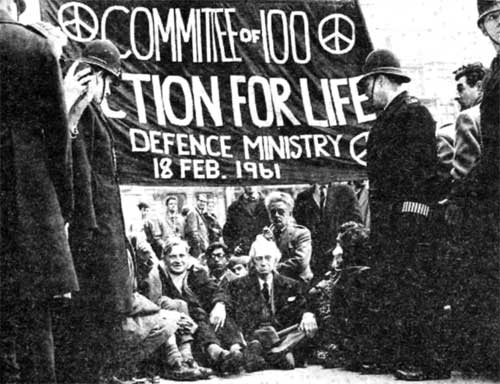
Members
of the National Committee of 100, a movement of non-violent
resistance to nuclear war and to the manufacture and use of
all weapons of mass extermination, joined with the Campaign
for Nuclear Disarmament (CND) and held demonstrations at various
U.S. air and nuclear bases in Britain.
Members of the Committee of 100, including Bertrand Russell,
considered civil disobedience a legitimate means in their
struggle. The CND avoided all illegal activities.
the
CND is still active today
Bertrand
Russell and the "Committee of 100"
at
an earlier action in 1961.
December
9, 1990
Solidarity
trade union founder and leader Lech Walesa won Poland's presidential
runoff election in a 3-1 landslide.
He
thus became the first directly elected Polish leader.
read
more
Lech
Walesa
December
10, 1948
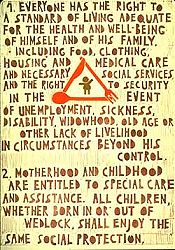
The
General Assembly of the United Nations adopted and proclaimed
the Universal Declaration of Human Rights. Following this
historic act the Assembly called upon all Member countries
to publicize the text of the Declaration and "to cause
it to be disseminated, displayed, read and expounded principally
in schools and other educational institutions, without distinction
based on the political status of countries or territories."
After 1950 the anniversary of the declaration has been known
as Human Rights Day.
Read
the Declaration of Human Rights
Resolution
25
December
10, 1950
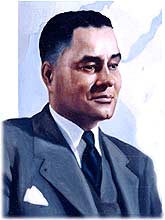
Detroit-born
U.N. diplomat Ralph J. Bunche became the first Black American
to win the Nobel Peace Prize. The award was in recognition
of his peace mediation during the first Arab-Israeli war in
1948.
read
more
From
his acceptance speech in Oslo, Norway.
“There are some in the world who are prematurely resigned
to the inevitability of war. Among them are the advocates of
the so-called "preventive war," who, in their resignation
to war, wish merely to select their own time for initiating
it. To suggest that war can prevent war is a base play on words
and a despicable form of warmongering. The objective of any
who sincerely believe in peace clearly must be to exhaust every
honourable recourse in the effort to save the peace. The world
has had ample evidence that war begets only conditions which
beget further war.”
December
10, 1961
Chief
Albert Luthuli, President-General of the banned African National
Congress, appealed for racial equality in racially separatist
apartheid South Africa after accepting the Nobel peace prize
for 1960 in Oslo, Norway.
Mr.
Luthuli said he considered the award "a recognition of
the sacrifices made by the peoples of all races [in South
Africa], particularly the African people who have endured
and suffered so much for so long.”
“It may well be that South Africa's social system is
a monument to racialism and race oppression, but its people
are the living testimony to the unconquerable spirit of mankind.
Down the years, against seemingly overwhelming odds, they
have sought the goal of fuller life and liberty, striving
with incredible determination and fortitude for the right
to live as men - free men.”
Albert
Luthuli
December
10, 1964
Rev.
Martin Luther King, Jr. was awarded Nobel Peace Prize.
From his speech in Oslo: “After contemplation, I conclude
that this award which I receive on behalf of that [civil rights]
movement is profound recognition that nonviolence is the answer
to the crucial political and moral question of our time --
the need for man to overcome oppression and violence without
resorting to violence and oppression.
Civilization and violence are antithetical concepts.”
Read
the speech:
December
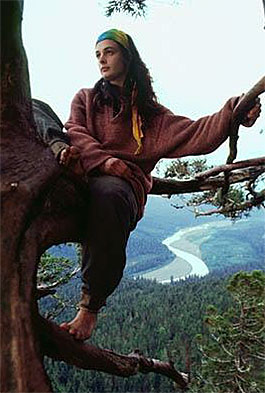
10, 1997
Julia
Butterfly Hill, age 23, climbed "Luna," a 1,000-year-old
California redwood, to protect it from loggers.
read
more
Julia
Butterfly atop Luna
December
10, 2003
Iranian
democracy activist Shirin Ebadi, the first Muslim woman to
win the Nobel Peace Prize, accepted the award in Oslo, Norway
"for her efforts for democracy and human rights. She
has focused especially on the struggle for the rights of women
and children."
read
more
Shirin
Ebadi
December
11, 1946
The
General Assembly of the United Nations voted to establish
the United Nations International Children's Emergency Fund
(UNICEF) to provide relief and support to children living
in countries devastated by World War II.
UNICEF
history
December
11, 1961
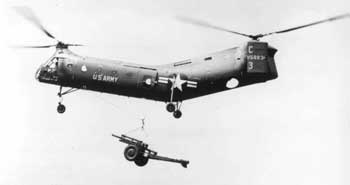
Two
U.S. Army air cavalry helicopter companies arrived in Vietnam,
including 33 Shawnee H-2lC helicopters and 425 ground and
flight crewmen.
They were to be used to airlift South Vietnamese Army troops
into combat, the first direct military combat involvement
of U.S. military personnel. President Kennedy had sent them
to bolster the U.S. advisors in the country since the 1950s,
and the failing of the Government of Vietnam’s armed
forces to resist the Viet Cong insurgency movement and the
Republic of [North] Vietnam.
Shawnee
helicopter
December
11, 1972
New
Zealand Prime Minister Norman Kirk (Labour Party) announced
withdrawal of his country’s troops from Vietnam and
a phase-out of his country’s draft just three days after
taking office.
Prime
Minister Norman Kirk
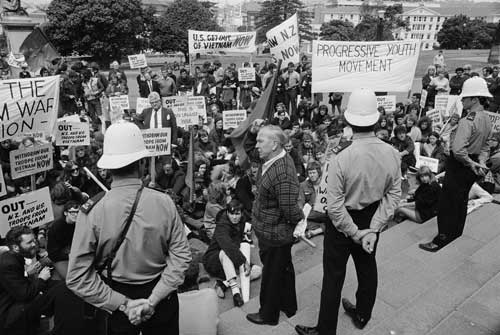
Anti-War
demo Parliament Buildings in Wellington, 1969
3,890 New Zealand military personnel had served there, suffering
37 dead and 187 wounded. This gave rise to a large and vocal
anti-war movement.
The
anti-war movement in New Zealand today
December
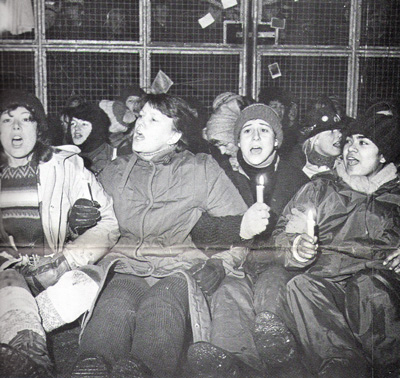
11, 1984
More
than twenty thousand women turned out for an anti-nuclear
demonstration at Greenham Common Air Base in England, where
U.S. cruise missiles were deployed. Some tried to rip down
the fence surrounding the base.
a
Greenham Peace Camp scrapbook
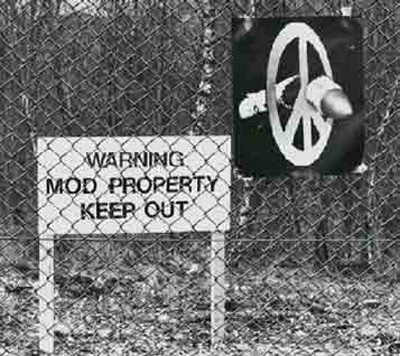
Poster
of Broken Missile taped to the fence of Greenham Common by
a protester, 1982.
Greenham
Women
December 11, 1992
The
three major U.S. television networks (ABC, CBS, NBC) agreed
on joint standards to limit entertainment violence by the
start of the following season.
read
more about TV violence & children
December 11, 1994
In
the largest Russian military offensive since its 1979 invasion
of Afghanistan, thousands of troops and hundreds of tanks crossed
the border into the Muslim republic of Chechnya. Just two weeks
before, a Russian covert operation to undermine the government
in Grozny, the capital, had been foiled and Dzhokhar Dudaev,
Chechnya’s first elected president, had threatened to
have the perpetrators executed.
The
Chechens had declared their independence from the Commonwealth
of Independent States, comprised of Russia and most of the
countries previously part of the Soviet Union. Chechnya had
been a Russian colony since 1859, and in 1943 Josef Stalin
had deported the population en masse, their return to their
homeland not allowed until 1957.
Russian
President Boris Yeltsin, who ordered the invasion, would not
deal with Dudaev, and had raised him to the rank of chief
enemy, ignoring Chechen-Russian history.
December 12, 1870
Joseph
H. Rainey (R-South Carolina) took his seat in the U.S. House
of Representatives, becoming the first black Member of Congress.
read
more
December 12, 1916
Dr.
Ben Reitman was arrested in Cleveland for organizing volunteers
to distribute birth control information at an Emma Goldman
lecture on birth control. He was sentenced to six months in
jail and a $1,000 fine plus court costs.
read
more
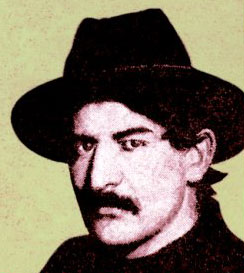
Dr.
Ben Reitman
December 12, 1947
The
United Mine Workers union withdrew from the American Federation
of Labor over its failure to organize workers in the mass production
industries such as textiles, automobiles, steel and rubber.
December 12, 1969
The
Philippine Civic Action Group, a 1,350-man contingent from
the Army of the Philippines, left South Vietnam. The contingent
was part of the Free World Military Forces, an effort by President
Lyndon B. Johnson to enlist allies for the United States and
South Vietnam, similar to President George Bush’s “Coalition
of the Willing,” the multi-national force in Iraq.
read
more
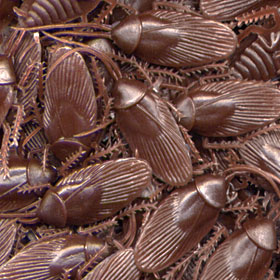
December 12, 1983
Seventy
people were arrested in Boston outside a hotel where a "New
Trends in Missiles" trade conference was being held.
Inside the hotel, over 1,000 cockroaches were released to
symbolize the likely survivors of nuclear war.
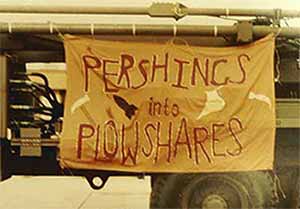
December
12, 1986
Plowshares
activists disarmed a Pershing missile launcher in West Germany.
In a statement of intent the four said, "With awareness
of our responsibility we understand that we are the ones who
make the arms race possible by not trying to stop it."
read
more
From
a pershing plowshares action 1984
December 13, 1917
Denmark, which was not involved in World War I, recognized
the right to conscientious objection to military service.
Norway had done so in 1900, Sweden in 1920. The Netherlands
went so far as to write it into their constitution in 1922,
and Finland enacted it in 1931.
read
more
European
Bureau for Conscientious Objection
December
13, 1942
Nazi
propaganda minister Joseph Goebbels recorded in his journal
his contempt for the Italians' treatment of Jews in Italian-occupied
territories. "The Italians are extremely lax in their
treatment of Jews. They protect Italian Jews both in Tunis
and in occupied France and won't permit their being drafted
for work or compelled to wear the Star of David."
December
13, 1981
Poland's
new military leaders issued a decree of martial law today,
drastically restricting civil rights and suspending the operations
of the Solidarinosc (Solidarity) trade union. The union's
activists reacted with an appeal for an immediate general
strike to protest.
read
more
December
13, 1982
At
the United Nations Second Special Session on Disarmament, the
two resolutions for a nuclear freeze (a verifiable end to all
testing, production and deployment of nuclear weapons by the
Soviet Union and the United States) passed 119-17 and 122-16.
The socialist and developing countries voted solidly for a freeze,
while the U.S. and NATO were those who voted against it.
December
13, 2001
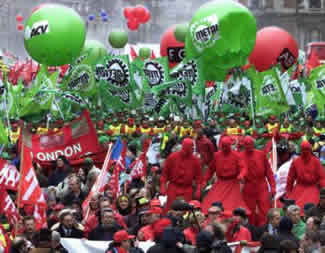
In
Belgium, 80,000 labor and anti-globalization activists began
several days of protests at a European Union summit conference
in Brussels.
Despite a massive police presence and unlike other similar
meetings, events remained peaceful.
read
more
December 13, 2001
President
George W. Bush served formal notice that the United States
was withdrawing from the 1972 Anti-Ballistic Missile Treaty
with Russia (then the Soviet Union).
“I
have concluded the ABM treaty hinders our government's ability
to develop ways to protect our people from future terrorist
or rogue state missile attacks.” -
President Bush
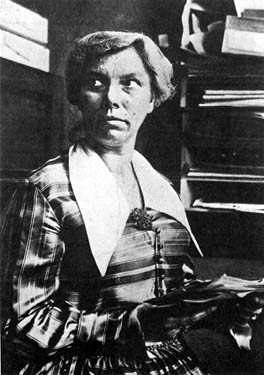
December 14, 1917
U.S.
peace activist and suffragist Kate Richards O'Hare was sentenced
to five years’ imprisonment for a speech denouncing
World War I Occupying a neighboring jail cell was Emma Goldman,
the well-known anarchist organizer, feminist, writer and anti-war
critic imprisoned for obstructing the draft. O'Hare was one
of a number of prisoners Eugene Debs cited in his "Canton
Speech" for which he in turn was imprisoned.
read
the speech
Kate
Richards O'Hare
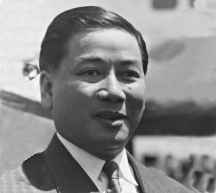
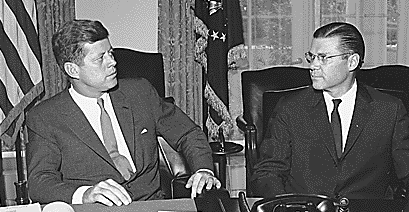
December
14, 1961
In a public exchange of letters with South Vietnamese President
Ngo Dinh Diem, U.S. President John F. Kennedy formally announced
the United States would increase aid to South Vietnam, including
the expansion of the U.S. troop commitment. Kennedy, concerned
with recent advances made by the communist insurgency movement
in South Vietnam, wrote: "We shall promptly increase
our assistance to your defense effort."
read
the letter
President
Ngo Dinh Diem
President
Kennedy and Secretary of Defense McNamara
December
14, 1980
At
Yoko Ono's request, at 2 PM Eastern Standard Time, John Lennon
fans around the world mourned him with 10 minutes of silent
prayer.
In
New York over 100,000 people converged in Central Park in
tribute, and in Liverpool, his hometown, a crowd of 30,000
gathered outside of St. George's Hall on Lime Street.
John
Lennon's legacy
December
14, 1994
After eight years, the United States finally agreed to honor
New Zealand's ban on nuclear weapons in its territory. U.S.
Navy ships armed with nuclear weapons no longer visited New
Zealand’s ports.
read more
December
15, 1791
The Bill of Rights became law when Virginia ratified the first
10 amendments to the United States Constitution.
The
Bill of Rights
The
Bill of Rights Defense Committee
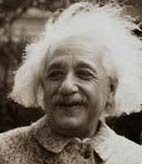
December
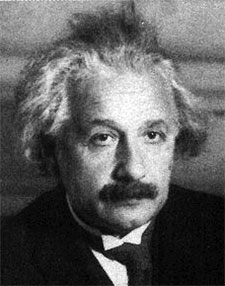
15, 1930
Albert Einstein, 1930
Albert Einstein urged militant pacifism and the creation of
an international war resistance fund. Einstein made his famous
statement in New York that if two percent of those called
for military service were to refuse to fight, and were to
urge peaceful means of settling international conflicts, then
governments would become powerless since they could not imprison
that many people. He struggled against compulsory military
service and urged international protection of conscientious
objectors. He concluded that peace, freedom for individuals,
and security for societies depended on disarmament; otherwise,
"slavery of the individual and the annihilation of civilization
threaten us."
Einstein
on Peace and World Government
December
15, 1946
Vietnamese
leader Ho Chi Minh sent a note to French Premier Leon Blum congratulating
him for his selection as French Premier and asking for peace
talks. France had exercised colonial power over the Vietnamese
as part of French Indochina, formed in October 1887 from the
provinces of Annam, Tonkin, Cochin China, and the Kingdom of
Cambodia; Laos was added in 1893. Vietnamese nationalists, however,
had demanded independence for the three provinces at the end
of World War II.
December
15, 1973
The
American Psychiatric Association reversed its long-standing
position and declared that homosexuality is not a mental illness
and
"...deplores all public and private discrimination in
such areas as employment, housing, public accommodation..."
Read
the APA postion statement
December
15, 2000
The
Chernobyl nuclear power plant was shut down 14 years after
becoming the site of the world's worst nuclear accident ever.
Nearly nine tons of radioactive material – dozens of
times as much as the Hiroshima and Nagasaki bombs –
were released in the explosion. The radioactive fallout affected
23% of Belarus, with 4.8% of Ukrainian territory and 0.5%
of Russia. The Belarussian government spends 30% of its annual
budget dealing with the aftermath of Chernobyl.
Take
a tour through the affected region:
December
16, 1942
Heinrich
Himmler, head of the Gestapo, made public an order that Gypsies
and those of mixed Gypsy blood be put on "the same level
as Jews and placed in concentration camps."
Himmler
was determined to prosecute Nazi racial policies, which dictated
the elimination from Germany and German-controlled territories
of all races deemed "inferior," as well as "asocial"
types, (hardcore criminals, homosexuals, Communists, Slavs,
Catholic priests). Gypsies fell into both categories according
to Nazi ideology and had been executed widely both in Poland
and the Soviet Union. The order of November 15 was merely
a more comprehensive program, as it included the deportation
to Auschwitz of Gypsies already in labor camps.
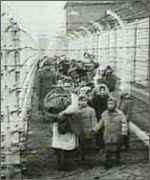
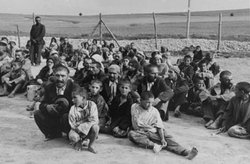
The
Porajmos (also Porrajmos) — literally Devouring —
is a term coined by the Roma (Gypsy) people to describe attempts
by the Nazi regime to exterminate most of the Roma peoples
of Europe.
read
more
Gypsy
arrivals to the Belzec death camp.
December
16, 1950
President
Truman proclaimed a national state of emergency in order to
fight "Communist imperialism." following major Chinese
intervention in the Korean War, launching a counter-offensive
against United States, United Nations and South Korean troops.
The
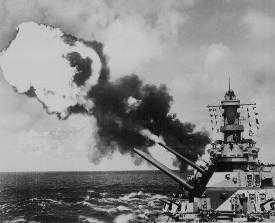
U.S. under General Douglas MacArthur had attacked the North
Korean Army at Inchon three months earlier, liberating Seoul,
destroying three divisions and forcing a retreat by the North
Korean People’s Army.
North
Korean Leader Kim Il Sung (second from L)
with
the Korean-Chinese joint military command
December
17, 1982
The
U.N. passed a series of 4 resolutions attacking apartheid in
South Africa: To organize an international conference of trade
unions on sanctions against South Africa (approved 129 to 2);
To encourage various international actions against South Africa
(126 to 2); Support of sanctions and other measures against
South Africa including international sporting events (139 to
1); Cessation of further foreign investments and loans for South
Africa (138 to 1). The U.S. was the only country to have voted
against all 4 resolutions (joined only by the United Kingdom
on two).
December
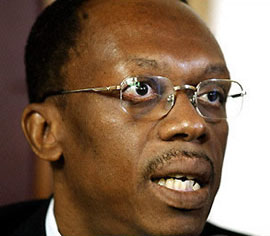
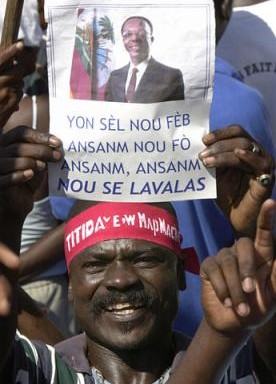
17, 1990
Jean-Bertrand
Aristide
Jean-Bertrand
Aristide, a radical Roman Catholic priest and opponent of
the dictatorship of Jean-Claude Duvalier, was elected president
in the first free election in Haiti's history. He was overthrown
in 1991 in a military coup led by led by Brigadier-General
Raoul Cedra.
Read
what happened next
December
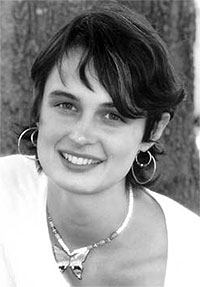
18, 1999
Julia
Butterfly Hill descended from her tiny platform 180 feet up
in a giant Redwood tree named "Luna," after perching
in it for 738 days to protect it from loggers.
Julia Butterfly Hill in the Ecology Hall of Fame
"The
question is not 'Can you make a difference?' You already
do make a difference.
It's
just a matter of what kind of difference you want to make
during your life on this planet."
–
Julia Butterfly Hill
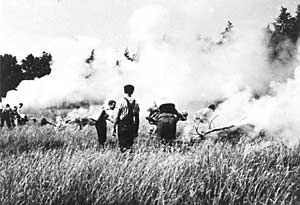
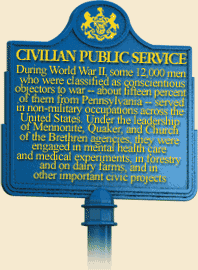
December 19, 1940
Fire
fighting. CPS 30, Walhalla, Michigan (Brethren)
Civilian
Public Service camps were established for
conscientious
objectors.
They
served without weapons
December 19, 1962
Juan
Bosch was elected President of the Dominican Republic in the
first free elections in 38 years.
He
was overthrown by a U.S.-backed coup in September, 1963.
read
more
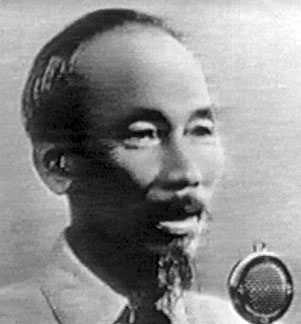
December 20, 1946
Ho
Chi Minh, Paris 1946
Ho
Chi Minh, leader of the Viet Minh, the group struggling to
expel French colonial rule from Vietnam issues the following
statement: "All the Vietnamese must stand up to fight
the French colonials to save the fatherland. Those who have
rifles will use their rifles; those who have swords will use
their swords; those who have no swords will use spades, hoes,
or sticks. Everyone must endeavor to oppose the colonialists
and save his country. Even if we have to endure hardship in
the resistance war, with the determination to make sacrifices,
victory will surely be ours." The first Indochina War
had begun.
Ho
Chi Minh and the U.S. "Declaration of Independence"
December
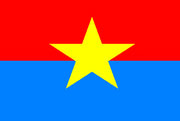
20, 1960
North Vietnam announced the formation of the National Front
for the Liberation of the South and designed to replicate
the success of the Viet Minh, the umbrella nationalist organization
that successfully liberated Vietnam from French colonial rule.
Ho
Chi Minh biography
National
Front for Liberation flag
December 20, 1990
Kansas
reservist Dr. Yolanda Huet-Vaughn refused orders to serve
in the Gulf War and is later sentenced to prison. The Kansas
medical board withdrew her her hospital privileges.
"The
issue was not whether I belonged in the military but whether
the military belonged in the Middle
East waging war. I did not want to focus on the personal decision.
I was trying to focus on the decision for which each and every
American would have to be responsible."
What
if they gave a war and nobody came?
December
20, 1999
The Vermont Supreme Court ruled that homosexual couples are
entitled to the same benefits and protections as wedded couples
of the opposite sex.
read
more
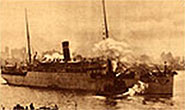
December 21, 1919
Amid a strike for union recognition by 395,000 steelworkers,
the "Red Scare" is launched with the deportation
of Alexander Berkman, Emma Goldman, and some 250 other radicals.
They were deported to Russia aboard the S. S. Buford ("The
Soviet Ark") from the "Land of the Free."
J.
Edgar Hoover, heading the Justice Department's General Intelligence
Division, advanced his career by implementing to the fullest
extent possible the government's plan to deport all foreign-born
radicals.
Emma
Goldman and Alexander Berkman also organized against World
War I
read more about Emma & Alex
S.S.
Buford
December
21, 1969
Seven
hundred supporters visited jailed Vietnam War resisters at Allenwood
Federal Penitentiary, Pennsylvania.
December
21, 1989
Vice
President Dan Quayle sends out 30,000 Christmas cards with
the word beacon misspelled"beakon."
"May our nation continue to be the beakon
of hope to the world."
-- The Quayles' 1989 Christmas card.
more
Quayle quotes
December
22, 1943
A 135 day strike by 23 conscientious objectors (COs) ended
dining hall segregation at Danbury Federal Penitentiary, Connecticut.
The number of conscientious objectors had increased from 15
in early 1941 to 200 by the time of the strike.
December
22, 1982
Congress passed the Boland Amendment (411-0) which prohibited
covert efforts by the President to overthrow the Nicaraguan
government.
December
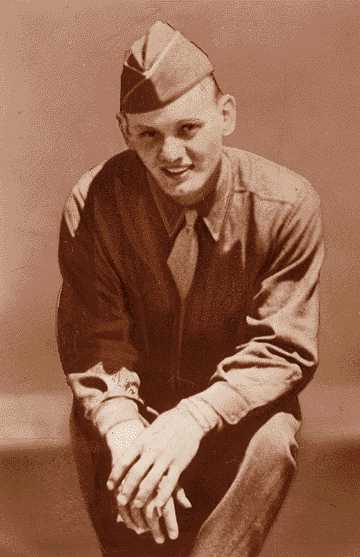
23, 1944
General
Dwight Eisenhower endorsed the finding of a court-martial
in the case of Eddie Slovik, who was tried for desertion,
and authorized his execution, the first such sentence against
a U.S. Army soldier since the Civil War, and the only man
so punished during World War II.
Slovik
made no secret of his unwillingness to enter combat, but his
pleas to be reassigned to noncombat status were rejected.
Eisenhower ordered that Slovik's execution be carried out
to avoid further desertions in the late stages of the war.
read
more
Eddie
Slovik
December
23, 1961
James Davis of Livingston, Tennessee, was killed by the Viet
Cong, and becomes the first of some 55,000 U.S. soldiers killed
during the Vietnam War.
Lyndon
Johnson later referred to him as “the first American
to fall in defense of our freedom in Vietnam.”
Over
two million Vietnamese would die before the end of the war.
James
Davis
anti
war demo chant
"Lyndon
Johnson told the nation
Have no fear of escalation
I am trying everyone to please
Though it isn’t really war
We’re sending fifty thousand more
To help save Vietnam from Vietnamese"
December
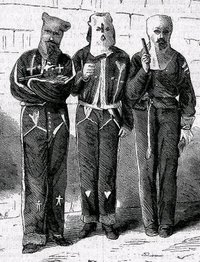
24, 1865
Months
after the fall of the Confederacy and the end of slavery,
several veterans of the Confederate Army formed a private
social club in Pulaski, Tennessee called the Ku Klux Klan.
Its first priority, it declared in its creed, was "to
protect the weak, the innocent, and the defenseless from the
indignities, wrongs, and outrages of the lawless, the violent,
and the brutal."
Three
Ku Klux Klan members, September 1871.
December
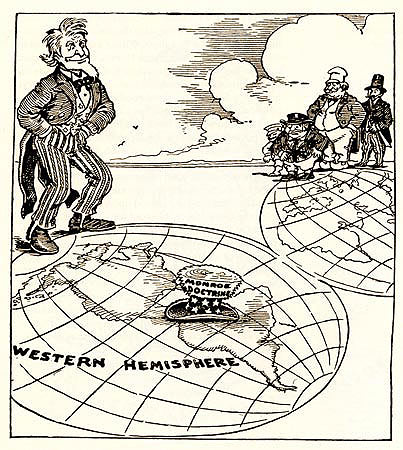
24, 1924
Costa
Rica withdrew from The League of Nations to protest U.S. Monroe
Doctrine which stated U.S. is “big daddy” of North
and South America.
read
more
December
24, 1992
President
George Herbert Walker Bush pardoned six people in the Iran-Contra
case, among them former Secretary of Defense Casper Weinberger
and Robert McFarlane, former national security advisor.
read
more about this and
other
presidential pardons
Iran-Contra
Boys
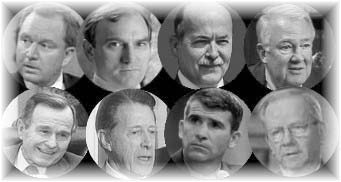
Otto
Reich /Elliott Abrams /John Poindexter/Edwin Meese
George H.W. Bush/Casper Weinberger/Oliver North/Robert McFarlane
December
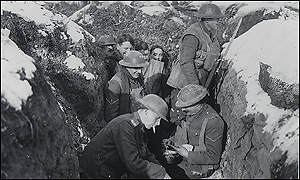
25, 1914
German
officer in the trenches with
British
soldier
Just
after midnight on Christmas morning, the majority of German
troops engaged in WWI ceased firing their guns and artillery,
and began to sing Christmas carols. At the first light of
dawn, many of the German soldiers emerged from their trenches
and approached the Allied lines across no man's land, calling
out "Merry Christmas" in their enemies' native tongues.
At
first the Allied soldiers suspected it to be a trick, but
they too soon climbed out of their trenches and shook hands
with the German soldiers. The men exchanged presents of cigarettes
and plum puddings; the Christmas Truce lasted several days.
read
more
German
and British soldiers fraternize
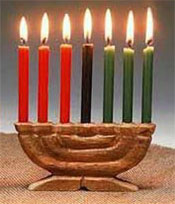
December 26, 1966
The
first Kwanzaa was celebrated in Los Angeles, California. Kwanzaa
is a non-religious day African-American holiday focusing on
family, community, and culture. The
name Kwanzaa is derived from the phrase "matunda ya kwanza",
which means "first fruits" in Swahili. The
celebrations is expressed through song, dance, drum, storytelling,
poetry and the lighting of candles in a Kinara all followed
by a large traditional meal.
The holiday is observed for seven days, each representing
a different principle:
a
Kwanzaa Kinara
read
more
• Umoja (oo-MO-jah) Unity
• Kujichagulia (koo-gee-cha-goo-LEE-yah) Self-Determination
• Ujima (oo-GEE-mah) Collective Work
and Responsibility
• Ujamaa (oo-JAH-mah) Cooperative economics
• Nia (NEE-yah) Purpose
• Kuumba (koo-OOM-bah) Creativity
• Imani (ee-MAH-nee) Faith
December 26, 1971
Two dozen Vietnam Veterans Against the War "liberate"
the Statue of Liberty with a sit-in to protest resumed bombings
in Vietnam. Also, they flew an inverted U.S. flag from the
crown as a signal of distress.
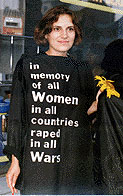
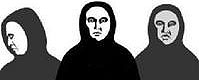
December 26, 1992
Women
In Black began campaign against rape during war, Belgrade,
Serbia.
read
more
Women
in Black is a world-wide network of women committed to peace
with justice
and
actively opposed to injustice, war, militarism and other forms
of violence.
Women
in Black home
December
27, 1914
The International Fellowship of Reconciliation (IFOR), an
inter-religious peace group, is founded in Cambridge, Great
Britain.
read
more
“The
International Fellowship of Reconciliation (IFOR) is
an international spiritually-based movement composed of people
who commit themselves to active nonviolence as a way of life
and as a means of transformation - personal, social, economic
and political."
"Your
goal is, in my opinion, the only reasonable one and to make
it prevail is of vital importance."
--Albert Einstein, in a letter to the FOR
December 27, 1971
Vietnam Veterans Against the War staged a peace protest at
historic Betsy Ross House, Philadelphia.
December
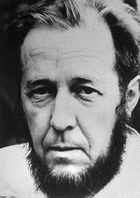
28, 1973
Aleksandr Solzhenitsyn's The Gulag Archipelago, 1918-1956,
is published in the original Russian version in Paris. The
book is a first hand account of brutal and repressive conditions
in the Soviet Union. It was published in the United States
a few months later.
Three
arrested at Capitol Hill Post Office in Seattle for refusing
to leave after attempting to mail humanitarian supplies to
Iraq in defiance of U.S.-led embargo.
read
more about sanctions against Iraq
December
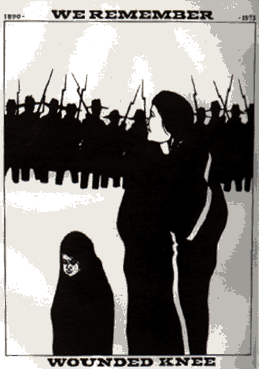
29, 1890
The U.S. Army killed approximately 400 Oglala Sioux at Wounded
Knee, in the new state of South Dakota. The 7th Cavalry (Custer's
old command) fired their artillery amidst women, children,
and fleeing men. The Wounded Knee Massacre was the final major
military battle in the genocide against Native Americans.
18 soldiers received Congressional Medals of Honor for their
"bravery."
The
wounded and dying were taken to a makeshift hospital in the
Pine Ridge Episcopal Church. Ironically, above the pulpit
hung a Christmas banner which read: Peace on Earth, Good Will
to Men.
read
more
December
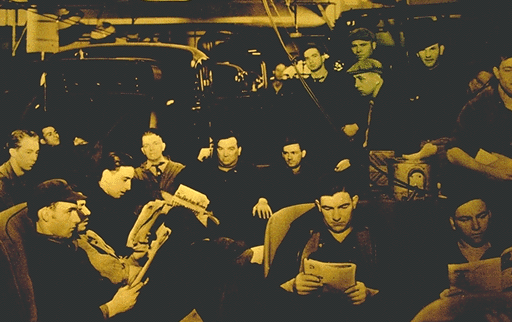
30, 1936
The United Automobile Workers sat down at General Motors in
Flint, Michigan. General Motors had refused to recognize the
union so the workers adopted a tactic developed by French
workers. Instead of picketing outside a factory only to be
ignored or forcibly cleared away, the sit-down strike enabled
workers to halt production and seize the plant "from
the inside." Finally, on February 11, 1937, GM acknowledged
the UAW as its employee's official "bargaining agent,"
sending ripples throughout the industry, as other auto makers
gradually accepted the legitimacy of the union. It was an
inspiration to workers in other industries to organize themselves.
More
about sitdown strikes
above:
Workers sit down at GM
below:
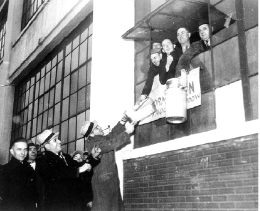
Supporters pass in food to sitdown strikers
December
30, 1971
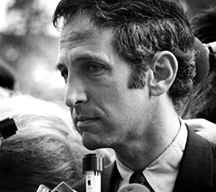
Daniel Ellsberg was indicted by a federal grand jury for releasing
Pentagon Papers to news media. The papers were part of a 7,000-page,
top-secret United States Department of Defense history of
the United States’ political and military involvement
in the Vietnam War from 1945 to 1971 and described air strikes
over Laos, raids along the coast of North Vietnam, and offensive
actions taken by U.S. Marines well before the American public
was told that such actions had already occurred.
These charges were later dismissed by Judge William M. Byrne,
who cited government misconduct in May, 1973.
December
31, 1970
The U.S. Congress repealed the Gulf of Tonkin resolution,
which in 1964 authorized a dramatic increase in U.S. military
involvement in Vietnam in response to an attack on U.S. forces
that was later revealed to be ficticious.
This
Week In History compiled by peacebuttons.info from various
sources
which are available upon request.
Submissions are always welcome. Please furnish sources. cb@peacebuttons.info
Reproduction
of this calendar for non-profit purposes
is permitted and encouraged. Please credit/link to www.peacebuttons.info









 Steve
Biko
Steve
Biko 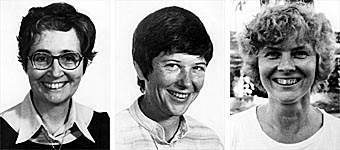

 Bhopal
survivors still demanding justice 2004
Bhopal
survivors still demanding justice 2004








 slave
auction
slave
auction
 first
vote
first
vote 


 Intermediate
Nuclear Force vehicle
Intermediate
Nuclear Force vehicle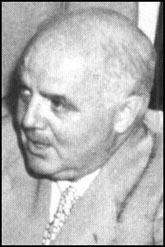











 Albert Einstein, 1930


 National
Front for Liberation flag
National
Front for Liberation flag

 S.S.
Buford
S.S.
Buford 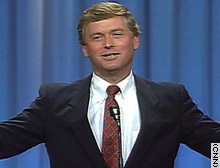

 German
and British soldiers fraternize
German
and British soldiers fraternize